A tidy drawer should make work easier, not create another place you must search for. The goal is to keep useful supplies close while giving every item a predictable home. How to Wash Pillows is a useful companion read here.
How to organize desk drawers starts with emptying them, sorting items by function, removing anything you don’t use at the desk, and giving each drawer a clear purpose. Measure the interior before adding trays or dividers. Keep daily tools closest to your hand, store backups lower or deeper, and leave some open space for future needs.
| Drawer area | Good for | Simple rule |
| Top or easiest-to-reach drawer | Pens, sticky notes, scissors, charging cable | Daily-use items only |
| Middle drawer | Notebooks, labels, less-used tools | Weekly-use supplies |
| Bottom or deep drawer | Paper, files, replacement supplies | Bulk and backup items |
| Front section | Frequently used items | Keep within easy reach |
| Back section | Occasional supplies | Store items you rarely need |
What You’ll Need?

You don’t need a matching set of containers before you begin. Start with what you already own, then buy organizers only if a clear need remains. Useful supplies include:
- A small trash or recycling bag
- A box for items that belong elsewhere
- A tape measure or ruler
- Small trays, shallow boxes, or drawer dividers
- Cable ties or reusable straps
- Labels, if several people use the desk
The most useful organizer is one that fits both the drawer and the items inside it. A beautiful tray that wastes half the available space won’t solve the problem.
How to Organize Desk Drawers in 7 Practical Steps?
1. Empty one drawer completely
Take everything out before deciding where anything belongs. A cleared drawer lets you see its full dimensions and reveals supplies that may have been buried. Work on one drawer at a time. Emptying the entire desk at once can turn a small project into a room-wide mess.
2. Sort items by function
Create simple groups based on how you use each item. Pens and pencils can form one group. Paper supplies can form another group. Chargers, adapters, and small electronics should stay together. Grouping items first helps you see how much space each category needs before you choose containers.
3. Remove clutter and relocate misplaced items
Discard dried-out pens, empty tape rolls, scraps, broken accessories, and packaging you no longer need. Move unrelated objects to their proper rooms or storage areas. A desk drawer shouldn’t become permanent storage for batteries, receipts, old keys, or unidentified cables. Keep duplicates only when you use them often enough to need backups.
4. Measure before adding organizers
Measure the usable width, depth, and height after you know what will remain. Check the drawer’s closing clearance as well. Tall containers may fit inside an open drawer but still prevent it from closing. Choose modular pieces when possible. Smaller trays and adjustable dividers can adapt as your supplies change.
5. Assign each drawer a purpose
Use frequency of use as your main rule. Put everyday tools in the easiest-to-reach drawer. Weekly supplies can sit farther back or one level lower. Paper refills, spare stationery, and other backups can go in the deepest or lowest space. This approach reduces searching because each item’s location reflects how often you need it.
6. Give small items and cables clear zones
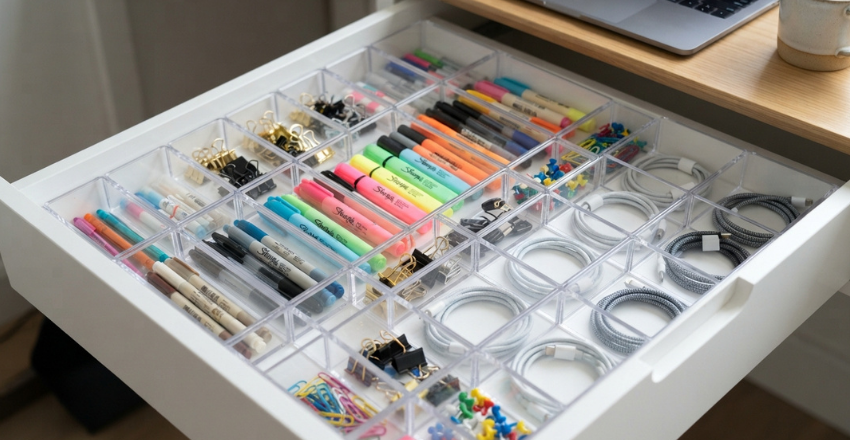
Tiny supplies create clutter quickly when they share one large compartment. Use separate sections for paper clips, sticky notes, erasers, USB drives, and similar items. Keep only the quantity you expect to use at the desk. Bundle charging cables with reusable ties. Label unfamiliar adapters before storing them so you don’t end up with a collection of unidentified cords.
7. Leave room and create a reset habit
Don’t fill every compartment simply because space exists. Keep one small area open for a future supply or temporary item. Once a week, take two minutes to return loose objects to their assigned zones. When a compartment starts overflowing, remove something before adding another container. That small reset makes the system easier to maintain.
Shallow vs. Deep Drawers Need Different Systems
A shallow drawer works well for small supplies because everything stays visible in a single layer. Deep drawers need a different approach.
| Drawer type | Store here | Avoid |
| Shallow | Pens, scissors, sticky notes, clips, small tech items | Tall containers and stacked supplies |
| Medium | Notebooks, calculators, labels, chargers | Loose piles |
| Deep | Files, paper, backup supplies, larger equipment | Tiny objects at the bottom |
Try to avoid stacking small objects in deep drawers. Once one item covers another, the item underneath becomes harder to find and easier to forget. For a deep drawer, use upright folders, boxes, or larger sections instead of many tiny trays.
Organize Without Buying New Containers
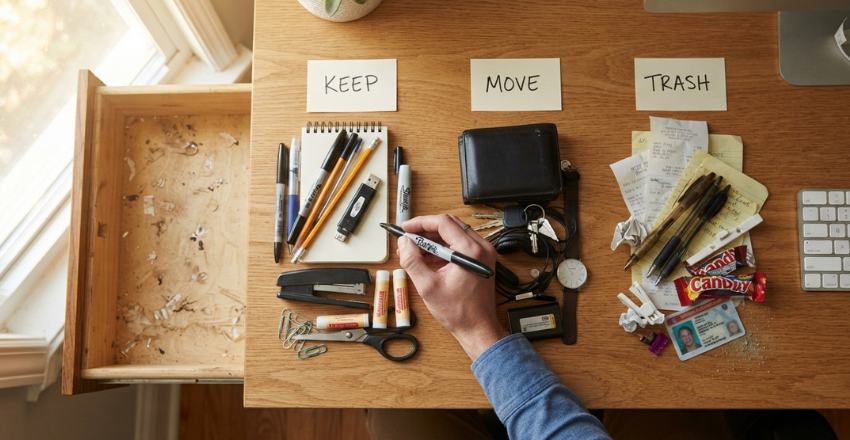
Drawer organization doesn’t need to become a shopping project. Small boxes from stationery, electronics, or household products can work as temporary compartments. Shallow lids can hold clips or USB drives. A clean gift box can separate notebooks from loose supplies.
Test the layout for several days before buying anything permanent. You may discover that you need fewer compartments than expected. If you do buy organizers, choose them after measuring and sorting. This keeps the storage solution tied to your actual habits.
Use the One-Home Rule
Every item you keep should have one normal place to return to. Your scissors shouldn’t move between three drawers. Spare pens shouldn’t appear wherever space happens to be available. A charger should return to the same tech zone after use. This rule also reveals when you own too much. If a category no longer fits in its assigned space, reduce the quantity before expanding your storage.
For broader ideas on layout, color, storage, and room planning, explore Gladnota’s interior design ideas.
Make the Rest of the Workspace Support the System
Drawer organization works better when the surrounding desk has a clear purpose too. If your desk doubles as a hobby bench or garage workstation, better task lighting can make small tools and supplies easier to see. For built-in desks, cabinetry, or larger storage changes, the home remodeling guide can help you think about the workspace as part of the entire room.
Gladnota’s garage lighting ideas cover practical lighting options for work areas.
How to Keep the Drawers Organized?
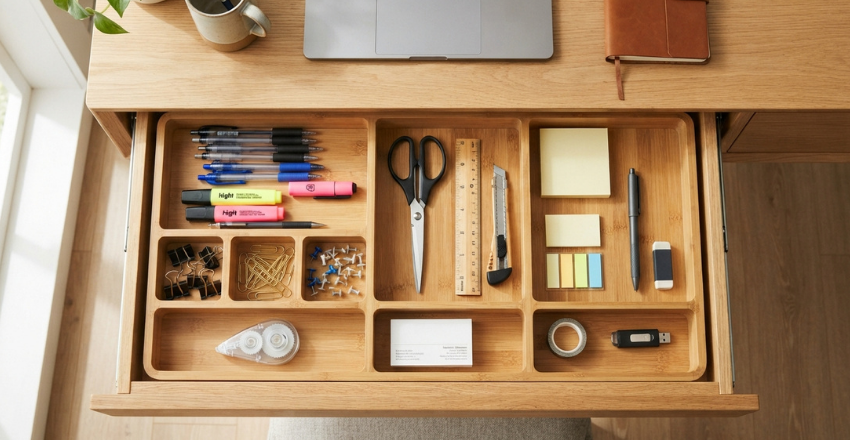
A storage system fails when putting something away takes more effort than leaving it loose. Keep categories broad enough to make decisions easy. “Writing tools” is often more useful than creating separate compartments for black pens, blue pens, pencils, and markers.
Review the drawers every few months. Remove empty supplies, outdated paperwork, and objects that have migrated into the wrong place. Most of the work happens during the first cleanup. After that, short resets are usually enough if every item still has a clear home.
Start With One Drawer
You don’t need to reorganize your entire office in one afternoon. Choose the drawer you open most often. Empty it, remove what doesn’t belong, sort what remains, and give each category a clear location. Once that drawer works well, repeat the same method elsewhere. A practical system is easier to maintain than one designed only to look perfect.
Apart from that, if you want to know more about how to organize a Small Closet, check our Interior Design category.
Frequently Asked Questions (FAQs)
Keep the items you reach for most often there. Pens, sticky notes, scissors, a small notebook, and one charging cable are common examples. Avoid using your most accessible space for spare supplies you may need only once every few months.
Empty and sort the drawer first, then reuse small boxes, shallow lids, sturdy packaging, or containers you already own. Test the arrangement before spending money. The categories matter more than whether the compartments match.
Start by removing broken items, duplicates, outdated papers, and supplies that belong elsewhere. Then give each category a fixed amount of space. If the category doesn’t fit, reduce it rather than automatically adding more storage.
Keep them together in one tech section. Bundle each cable loosely with a reusable tie and label adapters that aren’t easy to identify. Remove cables for devices you no longer own after confirming that they aren’t needed elsewhere.
You shouldn’t need to rebuild the system often. Do a short weekly reset and review the contents every few months. If clutter returns quickly, change the layout. The problem may be an inconvenient storage setup rather than a lack of organization.