

The best granite sealer for most homes is a penetrating, non-enhancing formula that resists both water and oil without changing the stone’s appearance. Aqua Mix Sealer’s Choice Gold and Stone Tech Bulletproof provide long-term protection, while Granite Gold works well for quick, beginner-friendly upkeep. We cover this in more depth in Best Wall Mounted Air Conditioner Heater Combo (2026).
Your ideal choice depends on where the stone is installed, how often you cook, and whether you prefer a spray or a longer-lasting impregnating treatment. This guide compares six popular options and explains how to choose one without paying for features you don’t need.
| Best Granite Sealer | Best for | Formula or format | Main advantage | Possible drawback |
| Aqua Mix Sealer’s Choice Gold | Best overall | Water-based penetrating | Long-lasting, natural finish | Higher upfront cost |
| StoneTech BulletProof | Porous or heavily used stone | Water-based impregnating | Strong stain resistance | Careful application needed |
| Miracle Sealants 511 Impregnator | Indoor and outdoor use | Solvent-based penetrating | Broad surface compatibility | Strong odor during use |
| Granite Gold Sealer | Beginners | Water-based spray | Fast and easy to apply | More frequent reapplication |
| TriNova Granite Sealer & Protector | Small kitchens | Spray | Convenient for spot coverage | Dries quickly |
| Tenax Proseal | Professional-style results | Penetrating | Deep penetration | Less beginner-friendly |
Direct answer: Choose Aqua Mix Sealer’s Choice Gold for balanced household protection and Stone Tech Bulletproof for porous or heavily used counters. Granite Gold is easier for first-time users. For outdoor stone or areas exposed to oil and moisture, Miracle Sealants 511 offers broader protection when applied with good ventilation.
Key Takeaways
- Use a penetrating or impregnating product rather than a glossy surface coating.
- Test the countertop with water before resealing.
- Choose a non-enhancing formula unless you want the stone to look darker.
- Check the label for food-contact suitability when treating kitchen counters.
- Follow the stated dwell time and remove every trace of excess product.
- Product durability depends on stone porosity, cleaning habits, and daily use.
How We Chose the Best Granite Sealer
This comparison focuses on the factors that matter in a working kitchen or bathroom:
- Penetration into natural stone
- Resistance to water, food, and oil stains
- Ease of application
- Indoor or outdoor compatibility
- Effect on color and finish
- Cure time and ventilation needs
- Value based on coverage and expected service life
The best granite sealer is typically a penetrating treatment that works below the stone’s surface instead of forming a thick film. This helps preserve granite’s natural appearance while reducing water and oil absorption. Unlike penetrating sealers, topical coatings can wear unevenly over time and may alter the stone’s gloss, texture, or grip.
For more practical upkeep projects, browse Gladnota’s home improvement guides.
Best Granite Sealer Options Compared
1. Aqua Mix Sealer’s Choice Gold: Best Overall
Aqua Mix Sealer’s Choice Gold is a strong choice for homeowners who want durable protection without a darkened or glossy finish. Its penetrating, water-based formula is designed for porous stone and grout.
It suits kitchens, bathrooms, floors, and other interior areas. The natural-look finish also makes it useful when you want the stone pattern to remain unchanged.
Pros
- Water-based and low odor
- Leaves a natural appearance
- Suitable for stone and grout
- Good fit for busy household surfaces
Cons
- Costs more than basic spray products
- The surface must be prepared carefully
- Multiple coats may be needed on absorbent stone
Verdict: This is the most balanced option for typical homeowners. It combines manageable application with stronger protection than basic maintenance sprays.
2. StoneTech BulletProof: Best for Porous Stone
StoneTech BulletProof is intended for porous natural surfaces that need stronger stain resistance. It works well on frequently used counters and stone with a history of absorbing water quickly.
The formula is commonly chosen for demanding kitchens and other high-use areas. It does not create a shiny topcoat when applied correctly.
Pros
- Strong resistance to water- and oil-based stains
- Suitable for porous materials
- Keeps a natural-looking finish
- Useful for heavy-use counters
Cons
- Higher purchase price
- Excess product must be removed before drying
- Full curing takes longer than a simple spray treatment
Verdict: Pick this option when protection matters more than quick application.
3. Miracle Sealants 511 Impregnator: Best for Indoor and Outdoor Use
Miracle Sealants 511 Impregnator works on many natural stone and masonry surfaces. Its broad compatibility makes it useful when a project includes countertops, floors, patios, or outdoor cooking areas.
Because it is solvent-based, ventilation matters. Always follow the manufacturer’s safety directions and keep flames or ignition sources away during use.
Pros
- Works indoors and outdoors
- Suitable for several stone types
- Resists moisture and common stains
- Does not form a heavy surface film
Cons
- Noticeable odor
- Requires ventilation
- Cleanup and application are less convenient than with water-based sprays
Verdict: Choose it for mixed indoor-outdoor projects or when one product must cover several masonry surfaces.
Planning a larger kitchen update? Gladnota’s renovation section can help you organize related improvement work.
4. Granite Gold Sealer: Best for Beginners
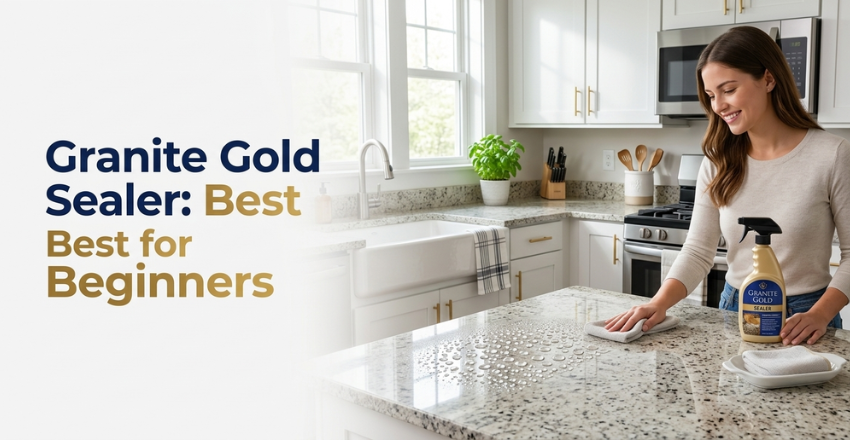
Granite Gold Sealer comes in a ready-to-use spray bottle. It is designed for natural stone surfaces, including granite, marble, and travertine. The spray-and-wipe format reduces setup and makes it easier to cover a small counter evenly.
This type of product works well for routine household resealing. It may require more frequent use than a concentrated impregnator, especially on a porous or heavily used countertop.
Pros
- Easy spray application
- No mixing required
- Suitable for several natural stones
- Convenient for smaller projects
Cons
- Less economical for large areas
- May need more frequent reapplication
- Not the first choice for highly porous outdoor stone
Verdict: This is a practical starter option for homeowners who value speed and simple instructions.
5. TriNova Granite Sealer & Protector: Best for Small Kitchens
TriNova’s spray format is convenient for islands, vanities, and modest countertop areas. It spreads quickly and does not require the tools associated with larger professional products.
The fast drying time can help you finish a small project quickly. It also means you should work in sections and wipe residue before it dries.
Pros
- Convenient spray bottle
- Easy to control on small surfaces
- Low setup time
- Suitable for routine household care
Cons
- Can dry before excess product is buffed away
- Less efficient for large floors or patios
- Several passes may be required on absorbent areas
Verdict: Select it for a compact kitchen or bathroom where ease of handling matters most.
6. Tenax Proseal: Best Professional-Style Choice
Tenax Proseal is a penetrating treatment often associated with stone fabrication and professional maintenance. It is intended to enter the material’s pores while keeping the visible surface close to its original appearance.
The application requires more attention than a consumer spray. Read the technical instructions for coverage, dwell time, ventilation, and curing before use.
Pros
- Deep penetrating action
- Suitable for demanding stone-care work
- Natural-looking result
- Useful for porous installations
Cons
- Less convenient for beginners
- Availability may vary
- Surface preparation must be thorough
Verdict: Consider it when you are comfortable following trade-style instructions or are working with a stone professional.
How to Choose the Best Granite Sealer for Your Countertop
Check Whether the Stone Needs Sealing
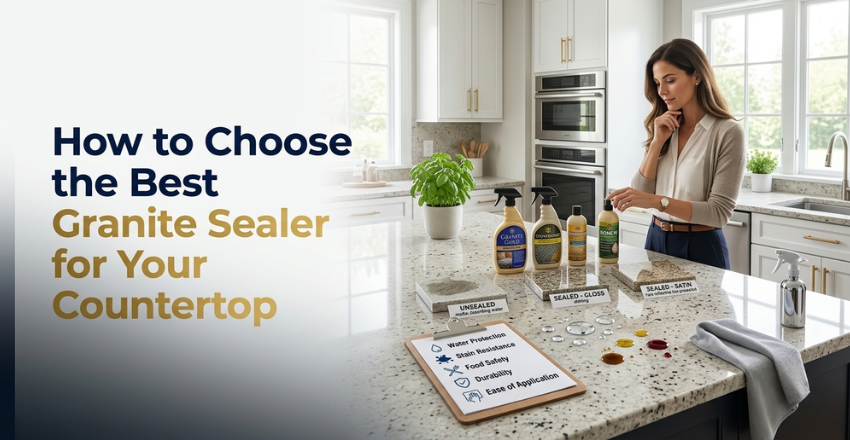
Place a few drops of water on a clean, dry section of the counter. Watch the area for several minutes. If the water remains beaded and the stone does not darken, the existing protection may still be working. If the area darkens as the water absorbs, resealing is likely needed. The water test is a better guide than following a fixed annual schedule because different slabs absorb liquids at different rates.
Choose Water and Oil Resistance
Kitchen surfaces face cooking oils, sauces, coffee, wine, and water. Look for a product that states resistance to both oil-based and water-based stains. A water-repellent treatment alone may not offer enough protection near a stovetop or food-preparation area.
Decide Whether You Want Color Enhancement
A non-enhancing treatment keeps the stone close to its current appearance. An enhancing product can deepen colors and make patterns look richer. Test any enhancer in a hidden place first. The color change may be permanent or difficult to reverse.
Match the Product to the Location
Indoor counters often benefit from low-odor, water-based formulas. Outdoor kitchens need a product approved for exterior exposure and temperature changes. Bathrooms require moisture resistance, while food-preparation areas need a formula suitable for the intended kitchen use. Follow the label rather than assuming every stone product has the same approvals.
For style ideas that complement natural-stone surfaces, see Gladnota’s interior design articles.
How to Apply a Penetrating Sealer
- Remove grease and residue. Clean the counter with a pH-neutral stone cleaner.
- Let the surface dry. Trapped moisture can interfere with absorption.
- Ventilate the room. Open windows and follow the product’s safety directions.
- Test a hidden area. Check for color or sheen changes before treating the full counter.
- Apply an even coat. Use the sprayer, cloth, pad, or applicator listed on the label.
- Respect the dwell time. Keep the area wet for the stated period without letting residue harden.
- Remove excess product. Buff the surface with a clean, lint-free cloth.
- Apply another coat if directed. Porous sections may absorb more than dense areas.
- Allow full curing. Keep water, cookware, and food away until the stated cure time has passed.
Never leave excess treatment to dry on the surface. Hardened residue can create haze, streaks, or sticky patches.
Common Sealing Mistakes
Sealing a Dirty Counter
Grease, soap film, and old polish can block absorption. They may also become trapped beneath the treatment.
Applying Too Much
More product does not always mean more protection. Stone absorbs only what its pores can accept. Any remaining liquid must be removed within the label’s working time.
Using Vinegar Before Application
Vinegar, lemon juice, and other acidic cleaners can damage acid-sensitive natural stones and weaken existing surface protection. Use a cleaner labeled for natural stone instead.
Assuming Quartz Needs the Same Treatment
Engineered quartz usually does not require penetrating treatment because it contains resin binders. Confirm the countertop material before applying any stone-care chemical.
Resealing on a Fixed Calendar
Some counters need attention sooner than others. Dense stone may remain protected for years, while a porous slab in a busy kitchen may need treatment more often. Use the water test and the manufacturer’s instructions to decide.
For more expert home improvement tips, product reviews, and practical buying guides, explore Gladnota and make every home project easier.
Final Recommendation
The best granite sealer for most households is Aqua Mix Sealer’s Choice Gold because it delivers a natural finish, low odor, and reliable penetrating protection. For porous or heavily used countertops, StoneTech BulletProof offers stronger stain resistance and long-lasting performance.
Choose Granite Gold if you want a beginner-friendly sealer that’s quick and easy to apply. For indoor and outdoor stone surfaces, Miracle Sealants 511 is an excellent choice, provided you use it in a well-ventilated area.
Before purchasing the best granite sealer for your project, test your countertop with a simple water test and measure the total square footage. This helps you select the right product, avoid unnecessary costs, and achieve even, long-lasting protection.
Apart from that, if you want to read more articles like this, then visit the Gladnota “home improvement” category.
Frequently Asked Questions
The best granite sealer for a kitchen is usually a penetrating, non-enhancing product that resists water and oil. Aqua Mix Sealer’s Choice Gold suits most homes, while StoneTech BulletProof is better for porous stone or counters exposed to frequent cooking spills.
There is no universal schedule. Test the surface with water every six to twelve months. Reseal when the stone begins absorbing moisture or when the product manufacturer recommends another application.
Yes. The stone can only absorb a limited amount. Excess liquid left on top may dry into streaks or haze. Remove all residue within the stated working time.
A correctly applied penetrating treatment should not create a thick film. The counter should feel close to its original texture after curing.
No. It slows absorption and gives you more time to wipe up spills, but it does not make natural stone immune to stains. Clean oil, wine, coffee, and acidic liquids promptly.
Most homeowners can treat a clean counter with a consumer-grade product. Read the label, ventilate the space, test a hidden section, and work in manageable areas. Hire a stone professional for damaged, previously coated, or unusually porous surfaces.

