A realistic walk-in bathtub cost can complete many projects, ranging from several thousand dollars to the mid-five figures. Complex remodeling, premium features, and accessibility changes can push the total higher. Elsewhere on the site: Fumigation Cost.
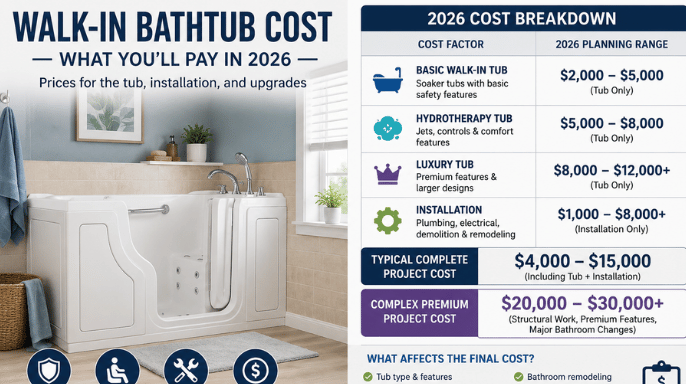
Direct answer: In 2026, many professionally installed walk-in tub projects fall around $4,000 to $15,000, though basic jobs can cost less and premium remodels can exceed $20,000. The tub type, plumbing, electrical work, room changes, removal, and water-heater needs determine where your final quote lands.
| Cost factor | 2026 planning range | What affects it |
| Basic walk-in tub | $2,000–$5,000 tub only | Size, material, safety features |
| Hydrotherapy tub | $5,000–$8,000 tub only | Jets, controls, comfort features |
| Luxury tub | $8,000–$12,000+ tub only | Premium features and larger designs |
| Installation | About $1,000–$8,000+ | Plumbing, electrical, demolition, remodeling |
| Typical complete project | Roughly $4,000–$15,000 | Tub choice and installation scope |
| Complex premium project | $20,000–$30,000+ possible | Structural work, premium tub, major bathroom changes |
These ranges combine current 2026 estimates from NCOA, Angi, HomeAdvisor, ConsumerAffairs, and manufacturer pricing. Their totals differ because each source defines the project scope differently. – A basic tub can start near $2,000 before installation.
- Many complete installations fall around $4,000 to $15,000.
- Plumbing, electrical, demolition, and room changes can add thousands.
- Premium projects can pass $20,000 and sometimes reach $30,000 or more.
- Original Medicare does not generally cover this type of home fixture.
- Some Medicare Advantage, Medicaid waiver, veterans, and home-modification programs may provide help for eligible households.
- Compare itemized quotes, not headline prices.
Walk-In Bathtub Cost by Type in 2026

The tub itself creates the starting point for your budget. A simple soaker costs less than a model with water jets, heated surfaces, or specialty access. NCOA places basic soaker tubs at about $2,000 to $5,000 before installation. Whirlpool models run about $5,000 to $8,000. Luxury multi-feature models can start around
| Tub Type | Tub Price | Estimated Total Cost With Installation |
|---|---|---|
| Basic soaker | $2,000–$5,000 | $3,000–$10,000 |
| Hydrotherapy or whirlpool | $5,000–$8,000 | $6,000–$13,000 |
| Luxury multi-feature | $8,000–$12,000+ | $9,000–$17,000+ |
| Wheelchair-accessible | Varies | Often higher due to specialised accessibility features |
| Bariatric | Varies | Often higher due to larger size and reinforced construction |
NCOA’s current estimates put installation around $1,000 to $5,000 in many cases. Kohler’s broader industry estimate places installation between $2,500 and $8,000 or more. That difference shows why you need to check what each quote includes.
Walk-In Bathtub Cost The average for a complete installation is $4,000, with many projects between $4,000 and $15,000. HomeAdvisor uses a wider 2026 range of $4,000 to $22,100 and reports an average near $13,100. It’s not necessarily contradictory. One project may be a direct tub replacement. Another may require new wiring, relocated pipes, wall repairs, flooring work, and a larger water heater.
What Makes an Installed Quote More Expensive?
A dealer may advertise a tub price that looks manageable. The final contract can be much higher once the bathroom is inspected.
Plumbing Changes
A tub that fits the old bathtub opening may still need supply or drain changes. ConsumerAffairs estimates plumbing upgrades at roughly $500 to $2,000 in its 2026 cost breakdown, depending on whether pipes must be moved, extended, or added. Drain location and existing bathroom conditions can change labor needs. k
Jets, heaters, pumps, and other powered features may need suitable electrical service. Contractors must also check whether nearby outlets and circuits meet the tub’s requirements.
ConsumerAffairs estimates electrical upgrades at about $200 to $1,200 in many projects. NCOA notes that some bathrooms may need suitable GFCI protection or even panel work. Land and site preparation: Removing the existing fixture can add demolition, disposal, and repair costs. ConsumerAffairs places old-tub removal around $250 to $700.
Walk-In Bathtub Cost: Angi estimates that permit fees, preparation, demolition, and disposal together may add about $300 to $1,000. Your local price will depend on the bathroom and local requirements.
Water heater capacity: A deeper bathing fixture uses more hot water than many standard tubs. Your installer should check whether the existing water heater can meet the selected model’s needs. ConsumerAffairs notes that a water-heater upgrade can add as much as $3,000 in some projects. Whether you need one depends on the tub and the home’s existing system.
Structural modifications: Larger or specialty units can require wall, floor, doorway, or fixture changes. NCOA advises buyers to check whether the unit can pass through the doorway and fit the existing floor plan. If it is part of a broader renovation, Gladnota’s home remodeling planning guide covers scope, budget for hidden work, comparing contractors, and handling change orders.
The Quote-Scope Check: Find the Real Project Total
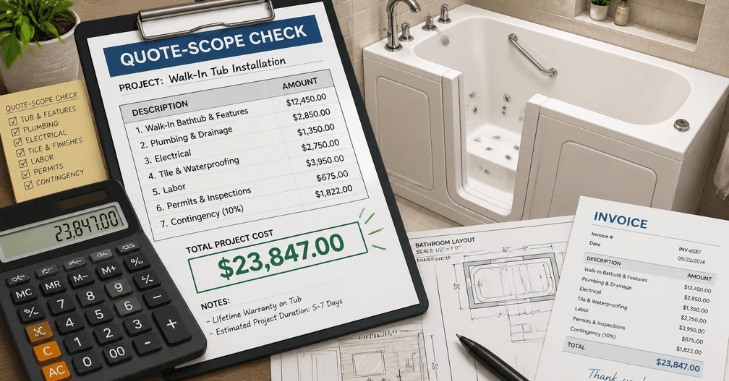
One of the easiest buying mistakes is comparing two totals that cover different work. Use this simple Gladnota budget check before deciding which proposal is cheaper:
Tub + delivery + removal + plumbing + electrical + bathroom repairs + accessories + permits + cleanup = true project price.
Ask Each Installer To Show Those Items Separately
| Quote line | What to ask |
| Tub | Exact manufacturer and model? |
| Safety features | Which grab bars, seat, flooring, and controls are included? |
| Delivery | Included or charged separately? |
| Old fixture | Who removes and disposes of it? |
| Plumbing | Are drain and supply changes included? |
| Electrical | Are new circuits or outlets included? |
| Water heater | Has capacity been checked? |
| Walls and flooring | Who repairs surfaces after installation? |
| Permits | Who obtains them and pays the fees? |
| Warranty | What covers the tub, parts, and artistry? |
This approach matters because “installed price” does not always mean the same thing from one company to another.
Can Medicare or Other Programs Help Pay?
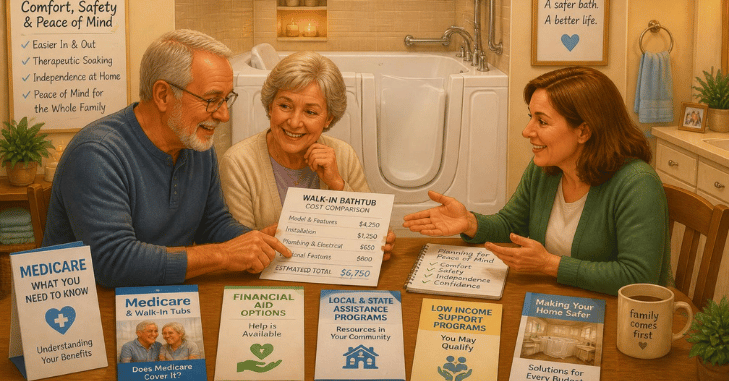
Original Medicare generally does not pay for walk-in tubs because Medicare does not classify them as covered durable medical equipment. They may be available in specific cases. NCOA reports that some Medicare Advantage plans offer extra benefits that may help with home accessibility costs. Benefits and eligibility depend on the individual plan.
Some Medicare Advantage plans offer Medicaid Home and Community-Based Services waivers. Eligible programs may help finance accessibility modifications for people who qualify. Availability varies by state. NCOA points to VA housing and home-modification programs, including HISA, for qualifying veterans. Program rules, disability requirements, and medical documentation apply. State programs, nonprofits, and local agencies on aging can also offer home-repair or accessibility assistance to eligible households. Check current requirements before making a purchase. Final Price Under Control
You don’t need to choose the cheapest tub. You need a system that meets your needs without paying for features you won’t use.
- Start with the required accessibility features. Decide which doorway width, seating, controls, handrails, and entry height matter before discussing extras.
- Favor the existing footprint when practical. Major layout changes can add plumbing, finish, and structural work.
- Separate needs from comfort upgrades. Jets, premium finishes, specialty lighting, and heated surfaces can raise the purchase price.
- Request several itemized estimates. Give each installer the same project description so the bids are easier to compare.
- Check financing terms carefully. A low monthly payment can hide a high total repayment cost. Review the interest rate, term, fees, and final amount due.
- Ask about current assistance before ordering. Insurance-plan benefits, grants, or local programs may require approval before work begins.
Gladnota’s remodeling guide also recommends comparing bids by scope rather than automatically choosing the lowest total.
Is a Walk-In Bathtub Worth the Cost?
The answer depends on how the bathroom will be used.
A household that values seated bathing and easier entry may place more value on the fixture than someone who mainly wants a quick shower. The right decision also depends on mobility needs, bathroom dimensions, budget, and expected length of time in the home.
Price should be weighed against daily usability. A less expensive unit that lacks a needed access feature may be poor value. A premium model can also be unnecessary if its extra features won’t be used.
Before You Buy, Ask These Seven Questions
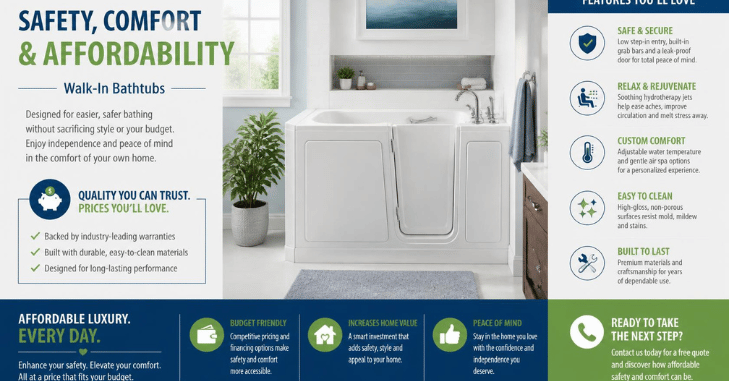
A detailed in-home assessment is the best time to uncover costs that a phone estimate may miss.
Ask each installer:
- What is the exact all-in price?
- Which model and features are included?
- Is removal of my existing tub included?
- Will plumbing or electrical systems need changes?
- Has my water heater capacity been checked?
- Who handles permits, finish repairs, and cleanup?
- What warranties cover the product and installation?
Next step: Get at least three itemized quotes from qualified installers serving your area. Ask each company to price the same scope. Compare the final total, included work, warranty, and financing terms before signing.
You can also browse Gladnota’s home improvement guides on repair and renovation planning.
Budget Before Requesting Estimates?
A working budget of roughly $4,000 to $15,000 covers many current complete-project estimates. Leave room above that range if you want premium features or expect significant bathroom modifications. Project, Not Only the Tub
The sticker price is only one part of the decision. Installation conditions can move the final total by thousands of dollars. Start with the access features you need. Then inspect the bathroom, check utilities, and request matching itemized estimates. That process gives you a much clearer number than any national average can provide.
Conclusion
Walk-In Bathtub Cost is more than just a bathroom upgrade—it is an investment in safety, comfort, and long-term accessibility. While many complete installations in 2026 fall between $4,000 and $15,000, the final price depends on the tub you choose, installation complexity, plumbing and electrical work, and any additional bathroom modifications.
Premium projects with luxury features or major remodeling can exceed $20,000, making it essential to understand exactly what each quote includes. Before making a purchase, focus on the accessibility features you truly need rather than optional upgrades, request several itemized estimates from qualified installers, and compare the full project scope—not just the advertised tub price.
Frequently Asked Questions
Current 2026 estimates vary by source and scope. Angi reports an $8,000 average and a common range of $4,000 to $15,000. HomeAdvisor reports about $13,100 on average with a broader $4,000 to $22,100 range.
NCOA lists basic soaker tubs at about $2,000 to $5,000 before installation. Added features, size, materials, and accessibility options can raise the price.
The scopes may differ. One quote may cover a simple replacement, while another includes demolition, plumbing, wiring, wall repairs, flooring, permits, or water-heater work.
Original Medicare generally does not cover the fixture because it is not treated as covered durable medical equipment. Certain Medicare Advantage plans may offer relevant supplemental benefits, so check your specific policy.
Possibly. Some state Medicaid Home and Community-Based Services waiver programs can support qualifying accessibility modifications. Rules and availability vary by location and eligibility.
Budget before requesting estimates?
A working budget of roughly $4,000 to $15,000 covers many current complete-project estimates. Leave room above that range if you want premium features or expect significant bathroom modifications. Project, Not Only the Tub
The sticker price is only one part of the decision. Installation conditions can move the final total by thousands of dollars.
Start with the access features you need. Then inspect the bathroom, check utilities, and request matching itemized estimates. That process gives you a much clearer number than any national average can provide.
Selected meta title: Walk In Bathtub Cost: 2026 Prices & Installation Fees
Meta description: Walk-in bathtub costs in 2026 range widely. See tub prices, installation fees, hidden upgrades, payment options, and how to compare quotes before buying.
Suggested slug: walk-in-bathtub-cost