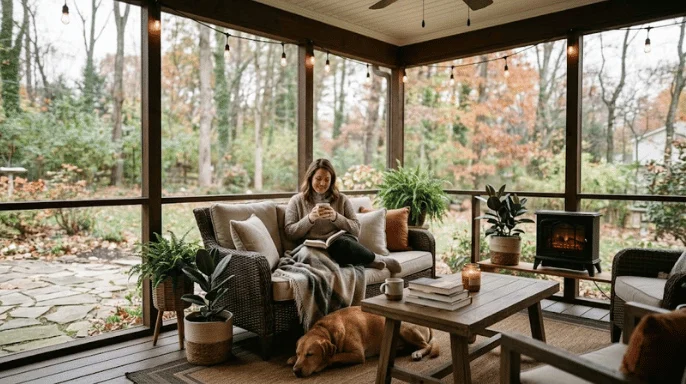
A screened porch can feel like a true extension of your home, not a place for leftover patio furniture. These screened in porch ideas focus on comfort, practical layouts, weather-ready materials, privacy, and easy maintenance. The goal is to create a space that works for morning coffee, family dinners, quiet reading, and relaxed evenings.
| Design decision | Practical choice | Why it works |
|---|---|---|
| Main use | Lounge, dining, or mixed-use | Gives the room a clear purpose |
| Furniture | Outdoor-rated seating | Handles humidity and changing temperatures |
| Flooring | Composite, tile, sealed wood, or concrete | Easier to maintain outdoors |
| Comfort | Ceiling fan plus shade | Improves airflow during warm weather |
| Privacy | Curtains, shades, plants, or slatted panels | Adds screening without closing the room |
| Lighting | Ceiling, task, and accent lights | Makes the porch useful after sunset |
| Small-space layout | Compact furniture and open pathways | Prevents a crowded feeling |
The most successful screened porches start with one clear purpose, then add comfortable outdoor furniture, durable flooring, controlled lighting, airflow, and privacy. Keep the furniture scaled to the room and preserve open walking paths. Choose materials suited to your local climate so the space stays comfortable and easy to maintain.
Key Takeaways
- Decide how you will use the porch before shopping for furniture.
- Treat the space like an outdoor room, but use materials suited to moisture and temperature changes.
- Keep small porches simple with compact pieces and fewer accessories.
- Add privacy where you need it instead of covering every screened wall.
- Use layered lighting and airflow to extend comfortable hours.
- Choose flooring based on maintenance, moisture exposure, and the existing structure.
Plan the Room Before You Decorate It
Start by deciding whether the porch will mainly support lounging, dining, entertaining, or several activities. Measure the usable floor area, doors, steps, and traffic paths before selecting a sectional or large dining table. A simple floor sketch can prevent an expensive piece of furniture from dominating the entire room.
Also consider exposure, because rain, humidity, sunlight, pollen, and temperature swings still reach a screened enclosure. Materials designed for covered outdoor use usually make more sense than delicate indoor finishes. Recent porch designs also treat these spaces as real rooms, while still favoring furniture and finishes that can tolerate outdoor conditions.
15 Screened In Porch Ideas Worth Trying
1. Create an Outdoor Living Room
Build the layout around a sofa or loveseat, two chairs, and a practical coffee table. Face the seating toward the yard, fireplace, or another natural focal point rather than pushing everything against the walls. An indoor-outdoor rug can visually connect the pieces and make the arrangement feel intentional.
2. Make Dining the Main Event
A dining-focused porch works well for families that already spend warm evenings outdoors. Choose a table that leaves comfortable clearance around chairs and doorways, then place lighting directly above the eating area. A nearby console or narrow cabinet can hold serving pieces without taking valuable table space.
3. Use a Bistro Layout on a Small Porch
A compact round table and two or four slender chairs can make a tight enclosure useful without filling every corner. Round tables reduce hard edges and often allow easier movement through narrow spaces. Keep the center visually open instead of adding several small tables and decorative stands.
4. Add an Indoor-Outdoor Rug
A rug adds color, softness, and a clearer seating zone without permanent changes. Select a product intended for outdoor or covered exterior conditions, especially where moisture may blow through the screens. Patterns with several tones can also disguise pollen and everyday dirt between cleanings.
5. Choose Flooring for Maintenance First
Flooring greatly affects how much work the porch needs throughout the year. Composite decking, porcelain tile, sealed wood, and existing concrete can all work when they suit the structure and exposure conditions. If you are comparing synthetic boards, Gladnota’s best composite decking guide covers current material choices and maintenance factors.
Concrete can be a practical base when the existing porch or patio already has a sound slab. Add a rug or movable furniture to soften its appearance rather than covering a serviceable surface without reason. Gladnota also has a practical guide on how to clean concrete safely when stains, dirt, or algae become part of seasonal maintenance.
6. Add Privacy Without Blocking Every View
Outdoor curtains, roll-down shades, slatted panels, and tall container plants can shield the side facing neighbors or a busy street. Concentrating privacy treatments where you need them preserves views and airflow on the other sides. Choose materials that can handle humidity and occasional wind rather than using standard indoor drapery.
7. Install a Ceiling Fan for Hot Days
Moving air can make a covered porch more pleasant during humid U.S. summers, especially in southern states. Size the fan for the room and choose a model approved by its manufacturer for the location and moisture exposure. Fixtures rated for damp or wet locations hold up far better in a screened enclosure than standard indoor models.
8. Layer the Lighting
Use more than one light source if you want the porch to function after sunset. A ceiling fixture can provide general light, while wall lights, lamps, or portable rechargeable lights create softer zones near seating. The same layered-lighting principle appears in Gladnota’s garage lighting ideas guide and transfers well to multipurpose spaces.
9. Give the Room One Strong Focal Point
A porch often looks more settled when the furniture relates to one obvious feature. That focal point might be a fireplace, a painted wall, an outdoor-safe television, a garden view, or a substantial coffee table. Once you choose it, arrange the largest furniture pieces around that feature, then add accessories.
10. Warm Up the Ceiling
The ceiling occupies a large visual area, yet it is easy to overlook during decorating. Wood planks, a painted finish, exposed rafters, or a contrasting color can add character without reducing usable floor area. Keep the finish compatible with the porch’s moisture level and the house’s exterior style.
11. Bring Plants Into the Room
Potted plants soften screen frames and help connect the enclosure with the yard beyond it. Choose varieties based on the actual amount of sunlight reaching the porch, not just for looks. Hanging pots can save floor space, while large containers work well near corners that otherwise feel empty.
12. Add Built-In Seating With Storage
A bench can make an awkward wall or narrow porch end more useful. Storage below the seat can hold outdoor cushions, games, or serving items, especially if the compartment is designed to stay dry. Pair the bench with a movable table so the same area can support dining, reading, or conversation.
13. Divide a Large Porch Into Zones
A larger enclosure can support both dining and lounging without feeling like one oversized furniture group. Use separate rugs, lighting positions, or furniture arrangements to define each activity while keeping a clear route between them. Repeating a few colors across both zones helps the whole porch feel connected.
14. Let Your Climate Guide the Materials
Hot, humid regions reward mildew-resistant fabrics, good airflow, and surfaces that clean easily. Colder regions may benefit from removable textiles and flexible furniture you can store or rearrange during harsh weather. In sunny, dry locations, shade and fade resistance may matter more than protection from persistent moisture.
| U.S. climate condition | Prioritize | Watch for |
|---|---|---|
| Hot and humid | Airflow, washable fabrics, moisture-tolerant finishes | Mildew and trapped moisture |
| Strong sun | Shade, lighter colors, fade-resistant materials | Hot surfaces and fabric fading |
| Cold or wet winters | Easy storage, durable flooring, protected furnishings | Freeze-thaw wear and moisture |
| Coastal exposure | Corrosion-resistant hardware and durable finishes | Salt and humid air |
15. Use Accessories You Can Change With the Season
Pillows, throws, table linens, planters, and portable lamps can update the porch without a renovation. Keep the permanent finishes fairly flexible, then use smaller items to introduce changing colors or patterns. This approach also makes worn pieces easier and cheaper to replace after several outdoor seasons.
Common Screened-Porch Decorating Mistakes
The most common mistake is buying furniture before confirming dimensions and traffic flow. Another is treating a covered space exactly like an indoor family room, even though moisture, pollen, sunlight, and temperature changes still affect materials. A third is filling every wall and corner, which can erase the open feeling that makes a screened enclosure appealing.
Watch for these problems during planning.
- Oversized sectionals that block doors or walking paths
- Indoor-only rugs or fabrics in damp locations
- A single harsh ceiling light
- Privacy coverings on every screened opening
- Dark finishes in a porch that already receives little daylight
- Too many small decorative objects
- No convenient storage for cushions and accessories
- Furniture placed without considering the best outdoor view
How to Make the Porch Feel Like Part of the House
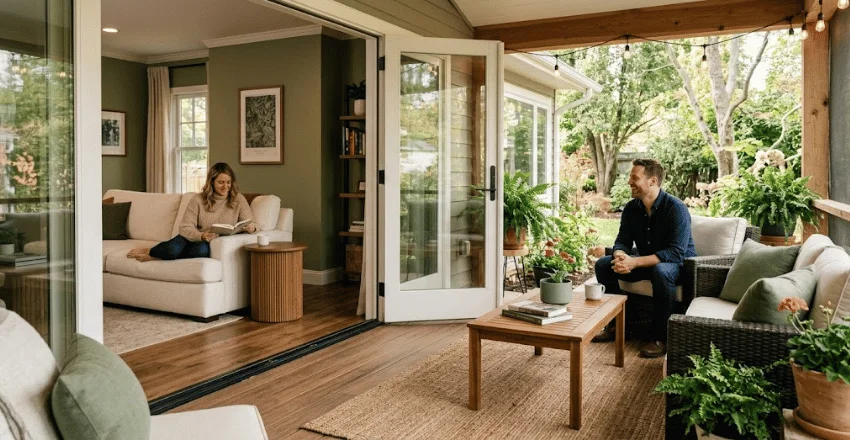
Repeat one or two details from the adjoining indoor room so the transition feels natural. That might mean carrying through a paint color, wood tone, furniture shape, or accent color without duplicating the indoor room exactly. Current porch designs often use this room-like approach while keeping the setting relaxed and durable.
You can also use the doorway between the house and porch as a design cue. Aligning a rug, seating group, or dining table with that opening creates a stronger visual connection between spaces. For more room-planning and décor topics, Gladnota’s interior design guides offer related ideas for functional home spaces.
Frequently Asked Questions
What are the best screened in porch ideas for a small space?
Start with one main activity instead of trying to fit a dining room and living room into a narrow enclosure. Use compact chairs, a loveseat, a small round table, and wall or hanging elements that preserve floor area. Keeping visible floor space around furniture usually makes the room feel larger and easier to use.
What furniture works best on a screened-in porch?
Outdoor-rated furniture is the safest starting point because screens do not create a fully conditioned indoor environment. Aluminum, suitable outdoor woods, resin wicker, and other weather-conscious materials are common choices, paired with cushions designed for covered exterior use. Choose the material after considering humidity, sunlight, storage, and how often you want to clean it.
Can you use a regular rug on a screened porch?
A porch may stay drier than an open patio, but wind-driven rain and humidity can still reach the floor. An indoor-outdoor rug is usually easier to maintain because it is designed for tougher conditions. Whatever you choose, lift it and clean beneath it periodically so trapped moisture and dirt don’t go unnoticed.
How can you make a screened porch more private?
Cover only the exposed sides with outdoor curtains, roll-down shades, slatted panels, or tall plants. Partial screening keeps the room connected to the outdoors while limiting direct views from neighbors or the street. Test the solution during the time of day when privacy matters most because sun angle and nighttime lighting can change visibility.
Do you need a permit to update a screened porch?
Simple decorating changes normally differ from structural construction, but local requirements vary across the United States. Adding a roof, changing framing, installing new electrical circuits, or building a fireplace may trigger permits or inspections in your jurisdiction. Contact your local building department before starting work that changes the structure or utilities.
Start With the Change That Improves Daily Use
Measure the porch, choose its main purpose, and identify the biggest current frustration before spending money. Fixing poor seating, weak airflow, inadequate lighting, or missing privacy usually makes a bigger difference than adding more décor. Once the functional pieces work together, use color, plants, textiles, and personal objects to make the room feel like yours.