Knowing how to wash pillows correctly can remove sweat, body oils, dust, and odors without leaving the filling lumpy or damaged. Start by checking the care label. Most down and polyester-filled designs can go in a washer, while solid memory foam and latex usually need spot cleaning.
The washing method matters, but drying matters even more. Any filling that remains damp inside can develop stale odors or mildew.
| Cleaning factor | Recommended approach |
| First step | Read the care label |
| Machine-washable types | Many polyester, down, feather, and cotton-filled models |
| Usually not machine washable | Solid memory foam and latex |
| Water temperature | Follow the label; warm water suits many washable fillings |
| Detergent | A small amount of mild liquid detergent |
| Washer cycle | Gentle or delicate |
| Drying method | Low heat or air drying, depending on the label |
| Suggested cleaning frequency | About every three to six months |
Direct answer: Check the care tag, remove the case and protector, treat visible stains, and wash machine-safe fillings on a gentle cycle with a small amount of detergent. Run an extra rinse, then dry the item completely. Spot-clean solid foam and latex rather than putting them through a washer.
Can You Put a Pillow in the Washing Machine?
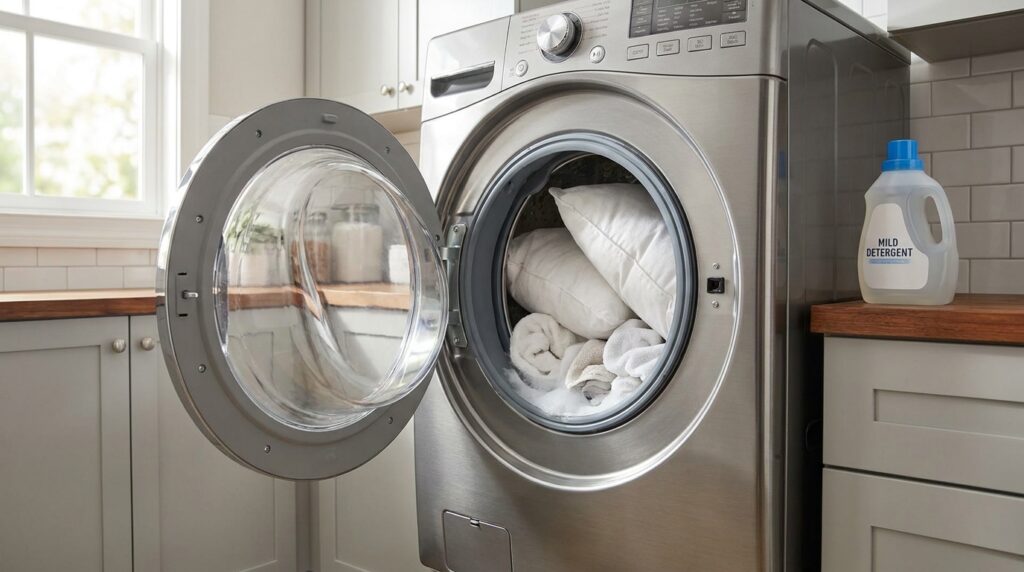
Many polyester fiberfill, feather, and down products are machine washable. Persil recommends checking the label first and notes that washing two at once can help balance the load. It also advises complete drying to reduce the risk of mold or mildew.
Solid memory foam and latex need different care. Washer agitation may tear foam or change its shape, while dryer heat can damage its structure. Some shredded-foam products are washable, but only when their manufacturer says so.
Use this quick guide before choosing a method:
| Filling type | Washer safe? | Recommended cleaning method | Drying method |
| Polyester fiberfill | Usually | Gentle machine cycle | Low heat or air dry |
| Down or feather | Often | Gentle machine cycle | Low heat; fluff regularly |
| Cotton | Sometimes | Follow the care label | Air dry or low heat |
| Shredded memory foam | Sometimes | Manufacturer instructions | Usually air dry |
| Solid memory foam | Usually no | Vacuum and spot clean | Flat air drying |
| Latex | Usually no | Spot clean | Flat air drying |
| Buckwheat hull | No | Wash cover; keep hulls dry | Air dry cover fully |
When the label conflicts with general advice, follow the label. The manufacturer’s directions account for the shell fabric, stitching, filling, and construction of that specific product.
What You’ll Need
Gather your supplies before removing the bedding:
- Mild liquid laundry detergent
- A clean white cloth
- Soft stain-removal brush
- Washing machine or clean basin
- Dry towels
- Dryer balls or clean wool balls
- Vacuum with an upholstery attachment
- Drying rack, if needed
Avoid pouring in a full cap of detergent. Thick filling can hold soap, making rinsing difficult and leaving the fabric stiff or sticky.
How to Wash Pillows Step by Step

1. Read the Care Label
Look for washing, bleaching, and drying symbols. Check whether the item requires hand washing, dry cleaning, or spot cleaning. Do not assume that two products with similar fillings need identical care. Decorative trim, internal chambers, cooling gels, or glued layers can change the instructions.
2. Remove Covers and Inspect the Seams
Take off the pillowcase and zippered protector. Wash those separately according to their labels.
Check the outer shell for holes, weak seams, and loose stitching. Repair small openings before washing. A torn casing can release filling into the drum and may damage the appliance.
For other surface-care jobs around the house, Gladnota’s home improvement guides follow the same mild-first approach.
3. Treat Stains Before Washing
Blot fresh marks instead of rubbing them deeper into the fabric. Apply a small amount of mild detergent to a damp white cloth, then dab the stained area.
Leave the detergent on for several minutes unless the product label states otherwise. Use a soft brush only on durable fabric. Never mix bleach with vinegar, ammonia, acids, or another cleaner.
The test-first method also applies when you remove stains from wood, since aggressive treatment can create a larger damaged area.
4. Load the Washer Correctly
Place two similar-sized bed cushions in the drum when possible. This helps balance the machine during spinning. If you have one, add towels to distribute the weight.
A front-loader or top-loader without a center agitator is gentler. When using an agitator-style machine, place the items vertically to reduce twisting and compression. Cleaning experts also recommend washing two at a time when the machine has enough space.
Do not pack the drum tightly. Water and detergent need room to pass through the filling.
5. Choose a Gentle Cycle
Select the temperature shown on the care label. Warm water works for many washable synthetic and down-filled products, while delicate shells may require cold water.
Add a small amount of liquid detergent. Powder may be harder to rinse from thick material. Choose a gentle cycle with a moderate or low spin speed.
An Apartment Therapy comparison found that a warm, delicate wash with less detergent and a second rinse performed better than the cold-water and hand-washing methods tested. That result applies only to the tested items, so the care tag still takes priority.
6. Run an Extra Rinse
Once the main cycle ends, run another rinse-and-spin cycle. Press the surface gently afterward. If you see foam or feel slippery residue, rinse again.
Do not twist the item by hand. Twisting can shift the filling, strain the seams, and leave permanent lumps.
A mild-first cleaning process also works for hard household surfaces. Gladnota’s guide to cleaning concrete safely explains why starting gently is safer than using the strongest treatment first.
7. Dry the Filling Completely
Check the label before using a tumble dryer. Many polyester, feather, and down products tolerate a low-heat setting.
Add two or three dryer balls and pause the cycle periodically. Break up clumps with your hands, rotate the item, and continue until the center feels dry.
Air-dry foam on a flat, ventilated surface away from direct heat. The Sleep Foundation advises against using or storing memory foam until it is fully dry, as trapped moisture can encourage mold or mildew.
Try this dry-towel test:
- Place the cleaned item between two dry towels.
- Press firmly for ten seconds.
- Check the towels for damp patches.
- Continue drying if either towel feels moist.
This simple check catches hidden moisture that may not be noticeable on the outer fabric.
How to Clean Memory Foam Without Damaging It
Solid foam should usually stay out of the washer and dryer. Remove and launder its washable cover, then vacuum both sides using an upholstery attachment.
For a mark, mix a small amount of mild detergent with water. Dip a white cloth into the solution and wring it out well. Blot the area without soaking the foam, then wipe it with a second barely damp cloth.
Place the insert flat where air can circulate around it. Do not return the cover until the material is dry through the center.
For odors, sprinkle a light layer of baking soda over one side. Leave it for about an hour, vacuum it away, and repeat on the other side. This refreshes the surface without saturating the foam.
How to Remove Yellow Stains and Odors
Yellowing commonly develops as sweat, skin oils, hair products, and saliva pass through the pillowcase. Pretreating the affected area before a normal wash is safer than adding several cleaning agents to the drum.
Use these steps:
- Confirm that the fabric is washable and colorfast.
- Apply mild detergent or a product labeled for the shell fabric.
- Let it sit for the label’s recommended time.
- Wash using the permitted temperature.
- Add an extra rinse.
- Dry the filling fully before judging the stain.
Some old discoloration may remain after the fabric is clean. Avoid repeated hot washes or concentrated bleach unless the care label permits them.
Common Washing Mistakes
Using Too Much Detergent
Extra soap does not guarantee a cleaner result. It can become trapped in the filling and attract more dirt.
Machine-Washing Solid Foam
Foam becomes fragile when wet. Agitation can split it, while a hot dryer may affect its shape and support.
Skipping the Extra Rinse
Thick bedding holds more water than clothing. A second rinse helps remove detergent from the center.
Drying on High Heat
High temperatures may shrink shells, damage foam, or affect synthetic fibers. Use the lowest permitted setting.
Putting Damp Bedding Back on the Bed
A surface can feel dry while the middle remains wet. Keep drying until no cool or damp areas remain.
How Often Should You Wash Them?

A practical schedule is every three to six months, although the care label and household conditions matter. Good Housekeeping recommends cleaning them two to four times per year and washing pillowcases every one to two weeks.
Clean them sooner when:
- Someone has been ill
- Night sweats are frequent
- Pets sleep on the bed
- An odor remains after airing
- A spill reaches the inner filling
- Allergy symptoms become worse in bed
A washable protector reduces how quickly body oils reach the shell. It does not eliminate the need for periodic cleaning.
When Should You Replace One Instead?
Cleaning cannot repair collapsed filling or lost support. Consider replacement if the insert remains lumpy, has torn internal sections, smells after a full wash, or no longer returns to its shape.
For a basic resilience check, fold it in half and release it. If it stays folded or returns slowly, the filling may no longer provide reliable support. Good Housekeeping also identifies failure to spring back as a sign that replacement may be due.
Your Next Step
Check the care labels on your bedding today and separate machine-washable items from foam or latex. Repair weak seams, use less detergent than you would for a normal load of clothing, and allow enough time for complete drying.
Frequently Asked Questions
Read the label first. Machine-wash compatible fillings on a gentle cycle with mild detergent and an extra rinse. Spot-clean solid foam and latex. Dry every item completely before use.
Yes, when the drum has enough space. Two similar-sized items can balance the load and support more even cleaning.
Only when the label allows it. Use low heat, pause to fluff the filling, and keep drying until the center contains no moisture.
Baking soda can help reduce surface odors. Sprinkle it lightly, leave it for about an hour, and remove it with an upholstery vacuum attachment.
Common causes include excess detergent, strong agitation, high heat, poor load balance, or incomplete drying. Break up clumps during a low-heat drying cycle when the label permits.
Use bleach only when the care tag and bleach label permit it. Never combine it with vinegar, ammonia, acids, or another cleaner.