Learning how to remove adhesives starts with identifying the surface and choosing the mildest treatment that may work. Begin with warmth, soapy water, or gentle scraping. Move to oil or rubbing alcohol only when needed. Always test the method in a hidden spot before treating a visible area. Our related guide, How to Remove Oil Stains From Clothes, goes further into this.
| Quick fact | Recommendation |
| Safest starting method | Warm water and mild dish soap |
| Best scraping tool | Plastic card or plastic scraper |
| Useful for glass and metal | Rubbing alcohol |
| Useful for many plastics | Cooking oil or warm soapy water |
| Surfaces needing extra care | Painted walls, finished wood, coated metal and screens |
| Main safety rule | Test first and never mix cleaning chemicals |
Direct answer: Soften the sticky material with warm water, low heat, oil, or a suitable solvent. Let the treatment sit briefly, then lift the residue with a cloth or plastic scraper. Match the treatment to the surface, work slowly, and wash away any remaining cleaner when the mark is gone.
What You’ll Need
Gather a few basic supplies before you begin:
- Mild dish soap
- Warm water
- Clean microfiber cloths
- A plastic card or plastic scraper
- Cooking or baby oil
- Isopropyl alcohol
- A hair dryer
- Cotton swabs
- Protective gloves
- A surface-safe commercial remover, if needed
Avoid metal blades unless you’re working on plain, uncoated glass and know how to use one safely. Metal tools can scratch finishes, paint, and softer surfaces. A plastic card gives you more control and reduces the chance of permanent marks. Cleaning guides commonly recommend starting with mild soap or a plastic scraper before moving to stronger treatments.
How to Remove Adhesives in 7 Steps

This mild-to-strong sequence helps you avoid using an aggressive solvent when heat or soap would have worked. Heat, oil, alcohol, and warm detergent solutions appear repeatedly in current removal guides because different sticky compounds respond to different treatments.
Choose the Right Method for Each Surface
Glass
Start with warm soapy water or rubbing alcohol. Press a soaked cloth against the mark, wait a minute, then rub with a microfiber cloth. A plastic scraper is suitable for most jobs. A razor may remove stubborn material from plain glass, but it can scratch tinted, coated, or treated glass. Keep blades away from window film and decorative coatings.
Plastic
Use warm detergent water or a small amount of cooking oil first. Allow the oil to sit for about ten minutes, then wipe the softened material away.
Avoid acetone unless the manufacturer confirms that the plastic can tolerate it. Strong solvents can cloud, soften or discolor certain plastics. Current surface-specific guides recommend oil-based treatments and warn against nail-polish remover on plastic.
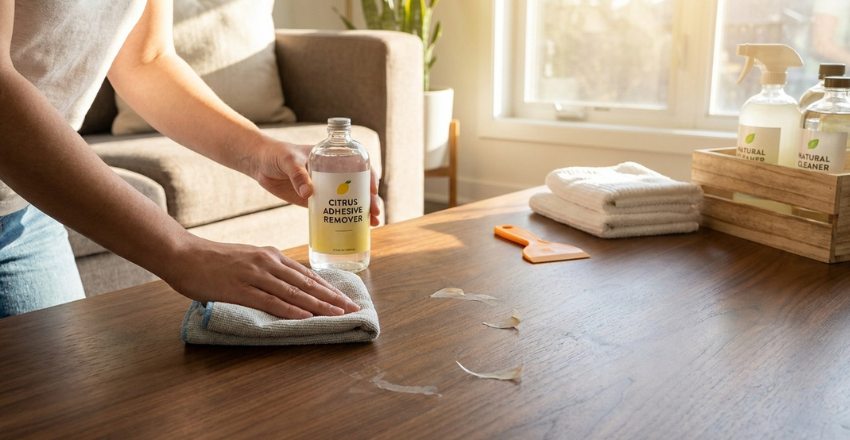
Finished Wood
Warm the area gently, then try a small amount of mild soap or oil on a cloth. Follow the grain and keep moisture to a minimum.
Test under the furniture or inside a cabinet first. Alcohol, vinegar and commercial removers may dull varnish, dissolve wax or leave a light patch. Gladnota’s guide to removing stains from wood offers related advice for protecting timber finishes.
Fabric and Clothing
Place the garment on a flat surface and scrape away any dry material with a spoon or plastic card. Dab rubbing alcohol or white vinegar on a hidden seam to test the color.
Treat the spot from the back when possible, then wash the item according to its care label. Don’t place it in a dryer until the sticky mark is gone. Dryer heat may make the remaining glue harder to lift.
Metal and Stainless Steel
Rubbing alcohol or a small amount of cooking oil works on many unpainted metal surfaces. Apply it with a soft cloth and rub in the direction of the grain on brushed stainless steel.
Don’t use abrasive pads or powders on polished appliances. They can leave fine scratches or change the sheen. See Gladnota’s stainless steel scratch removal guide before treating a marked appliance.
Painted Walls
Begin with warm water and a drop of mild dish soap. Use a barely damp cloth and avoid saturating drywall.
Rub lightly because repeated friction may polish flat paint or lift color. Test alcohol, oil and commercial products behind furniture before using them on a visible section. Stop if the cloth picks up paint.
Concrete
Remove the thickest material with a plastic scraper. Apply warm detergent water and scrub the spot with a stiff nylon brush.
Old construction glue may require a product labeled for masonry. Check whether the slab is sealed, painted, polished or stained before using a solvent. Gladnota’s concrete cleaning guide explains why coated and decorative slabs need gentler treatment.
Laptops and Electronics
Turn the device off and unplug it. Put a small amount of isopropyl alcohol on a microfiber cloth or cotton swab. The cloth should be damp, not dripping.
Keep liquid away from ports, seams, speakers and ventilation openings. Don’t apply oil to a laptop or screen. Check the manufacturer’s cleaning guidance before treating a display or coated casing.
Match the Remover to the Problem
| Treatment | Useful on | Avoid or test carefully on |
| Warm soapy water | Glass, ceramic, some plastics and painted walls | Unfinished wood and moisture-sensitive electronics |
| Cooking oil | Glass, metal and many plastics | Fabric, porous stone and unfinished timber |
| Rubbing alcohol | Glass, metal, fabric and some hard plastics | Painted, varnished or coated surfaces |
| Low hair-dryer heat | Glass, metal and sturdy plastics | Thin plastic, screens and heat-sensitive coatings |
| Commercial remover | Tough residue on approved surfaces | Leather, suede, unsealed stone and untested finishes |
| Plastic scraper | Most hard surfaces | Soft paint, delicate screens and loose coatings |
This table provides a starting point, not a guarantee. Materials sold under the same name may have different coatings. A hidden test remains the safest way to spot fading, clouding or surface softening.
Common Mistakes to Avoid
Don’t begin with acetone, paint stripper or another strong solvent. The product may dissolve the sticky layer while damaging the material beneath it.
Don’t scrape aggressively. Several gentle passes are safer than forcing a blade under the residue.
Never mix cleaners. Use one product at a time, rinse the surface, and let it dry before trying another method.
Don’t soak wood, drywall or electronics. Apply the cleaner to your cloth rather than pouring it onto the object.
Don’t assume a “natural” product is harmless. Oil may stain porous materials, while vinegar can affect certain stone, grout and finishes.
When a Commercial Remover Makes Sense
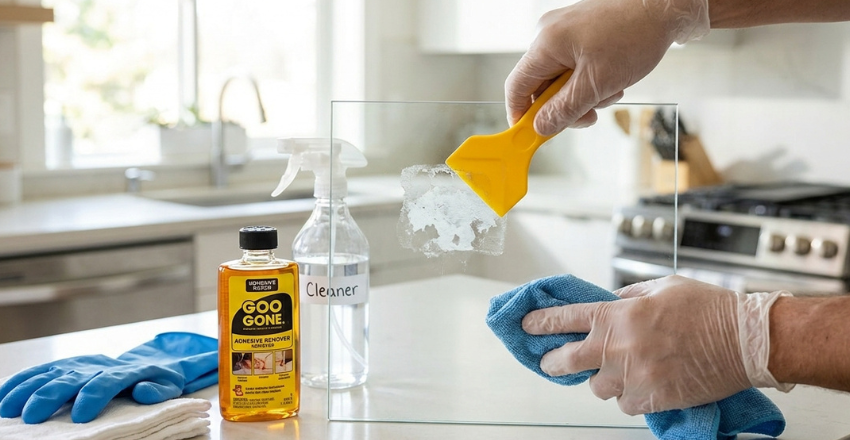
A labeled product can help with old tape, flooring glue, construction adhesive or thick residue that survives several mild treatments. Read the compatibility list and follow the stated dwell time.
Wear the protective equipment named on the label and ventilate the room. Keep solvent-soaked cloths away from flames and heat. For cured epoxy or structural products, mechanical removal or specialist help may be safer than repeated solvent use. Industrial adhesive guidance notes that cured products can be difficult to dissolve and that strong solvents may also damage plastic substrates.
Gladnota’s wood glue selection guide can help you identify common glue types used in furniture and household repairs.
Take the Safest Next Step
Begin with a hidden test using warm water, mild dish soap and a plastic scraper. Let the test area dry before checking the finish. Escalate one method at a time only when the surface shows no fading, clouding, scratching or softening.
Frequently Asked Questions
Start with warm soapy water and a plastic card. If that doesn’t work, use low heat or a small amount of cooking oil. Rubbing alcohol is a useful next step on compatible glass or metal.
It can soften many sticker and tape residues on nonporous surfaces. Apply it to a cloth, test a hidden area, and keep it away from open flames. Avoid assuming it is safe for every paint, plastic or furniture finish.
White vinegar may loosen light residue, but its acidity can affect some stone, grout, paint and finishes. Start with detergent and water, then test diluted vinegar in a hidden location.
Use low heat, mild detergent and gentle pressure. Keep the cloth barely damp and avoid metal scrapers. Stop if the paint becomes soft, shiny or transfers onto the cloth.
Avoid harsh solvents without a compatibility test, excessive heat, sharp blades and mixed cleaning chemicals. Don’t soak porous surfaces or apply liquid directly to electronic equipment.