A greasy splash doesn’t have to ruin your favorite shirt. Learning how to remove oil stains from clothes starts with absorbing the spill, applying a grease-cutting pretreatment, and washing the garment at the safest temperature shown on its care label.
Act before the item enters the dryer. Heat can make any remaining mark harder to lift, so air-dry the garment until you’re certain the fabric is clean.
| Key question | Practical answer |
| Best first action | Blot excess liquid without rubbing |
| Useful absorbent | Baking soda or cornstarch |
| Best pretreatment | Clear grease-cutting dish soap or liquid laundry detergent |
| Water temperature | The warmest temperature permitted by the care label |
| Drying method | Air-dry until the spot has disappeared |
| Delicate garments | Use mild detergent or take them to a professional cleaner |
Direct answer: Blot the spill, cover it with baking soda or cornstarch, and let the powder absorb the grease. Brush it away, apply clear dish soap or liquid detergent, and rinse. Wash at the warmest care-label temperature, then air-dry and inspect the garment. Repeat the treatment if a shadow remains.
What You’ll Need
Gather your supplies before starting:
- A spoon, dull knife, or clean white cloth
- Plain paper towels
- Baking soda or cornstarch
- Clear grease-cutting dish soap
- Liquid laundry detergent
- A soft toothbrush or laundry brush
- A basin or sink
- Clean water
- A drying rack or clothes hanger
Check the garment’s care label before applying any cleaner. Test your chosen product on an inside seam when the fabric is colored, printed, delicate, or unfamiliar.
For other practical cleaning projects around your home, Gladnota’s guide to cleaning concrete explains why identifying the surface and stain type should come before choosing a treatment.
How to Remove Oil Stains From Clothes Step by Step

Follow these steps in order. Starting with water alone may spread a fresh greasy spill rather than absorb it. Use a spoon or dull knife to lift away butter, salad dressing, motor grease, cosmetics, or food particles. Work gently so you don’t push the material deeper into the fibers.
Place a clean white cloth or plain paper towel over the affected area. Press down and lift straight up. Move to a clean section after each blot. Don’t scrub from side to side. Friction can enlarge the mark and work grease farther into the weave.
Cover the affected area with baking soda or cornstarch. Leave it for at least 15 to 30 minutes. A heavy spill or thick fabric may need more time. The powder may darken or form small clumps as it absorbs residue. Brush it away carefully rather than rubbing it back into the garment.
Apply a small amount of clear dish soap or liquid laundry detergent directly to the fabric. Spread it across the full mark with your fingertip or a soft brush. Let the cleaner sit for about five to ten minutes unless its label gives different directions. Don’t let the product dry completely on the garment.
Rinse the treated area thoroughly. Check both sides under good light. Apply a second round of detergent when you can still see a dark outline. Two treatments are often safer than aggressive scrubbing. Wash the item with a suitable laundry detergent. Use the warmest water permitted by the manufacturer, since recommended temperatures vary by fiber, color, and construction.
The American Cleaning Institute recommends pretreating grease and laundering in the hottest water that is safe for the fabric. Always let the care label set the upper limit. Hang the garment or place it on a drying rack. Inspect the area only after it has dried, because damp fabric can hide a faint shadow.
Repeat the pretreatment and wash cycle when needed. Don’t use a heated dryer until the discoloration and greasy feel are gone. Maytag likewise recommends line drying treated garments until the stain has been removed.
How to Treat an Old or Set-In Greasy Mark?
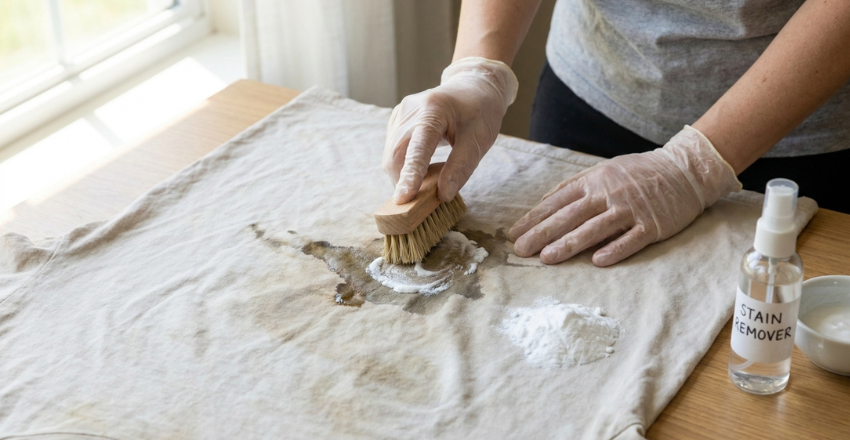
A dried spot usually needs more contact time. Begin by applying liquid detergent or dish soap and allowing it to penetrate for ten minutes. Soak washable clothing in warm water with detergent for about 30 minutes, if the care label permits soaking. Wash it at the recommended temperature, air-dry it, and inspect it again. You may need two or three rounds. Stop if the color fades, the fibers distort, or the surface begins to pill.
A garment that has already passed through the dryer can still improve, but there’s no guarantee of complete removal. Reapply liquid detergent, gently work it into both sides, and leave it for ten minutes before rewashing. Avoid internet remedies that suggest adding flammable automotive solvents to clothing. Such products can create washing and drying hazards and may damage dyes, elastic, coatings, or synthetic fibers.
Choose the Treatment by Fabric Type
| Fabric | Suggested approach | What to avoid |
| Cotton | Absorb, pretreat, and wash at the care-label temperature | Drying before inspection |
| Polyester | Use liquid detergent and allow extra pretreatment time | High heat |
| Denim | Work from both sides and repeat if needed | Hard scrubbing that lightens the dye |
| Wool | Blot, use a wool-safe detergent, and handle gently | Hot water, twisting, and vigorous brushing |
| Silk | Blot and consult the care label or a cleaner | Harsh detergent and rubbing |
| Suede or leather | Use an absorbent powder and seek specialist advice | Soaking the material |
Maytag advises avoiding water saturation on suede and suggests using cornstarch on a fresh greasy spill before gently brushing it away. When a label says “dry clean only,” blot the spill and take the item to a professional. Tell the cleaner what caused the mark and whether you applied another product.
The same mild-first principle applies to hard household surfaces. Gladnota’s article on removing stains from wood can help you avoid damaging finishes during other cleanup jobs.
Common Mistakes That Make the Problem Worse
Rubbing the spill
Rubbing spreads liquid and forces it into surrounding fibers. Blot upward instead.
Skipping the care label
A treatment that works on cotton may shrink wool, dull silk, or damage a special finish.
Using too much soap
More cleaner isn’t always better. Excess dish soap can create heavy foam in a washing machine and may require extra rinsing.
Combining cleaning products
Don’t mix stain removers, bleach, ammonia, vinegar, or other chemicals unless a product label specifically directs you to do so. Gladnota’s pink shower residue cleaning guide also explains why incompatible household cleaners should never be combined.
Machine-drying too soon
A faint mark can become more difficult to treat after exposure to heat from the dryer. Air-dry first and check the area in natural light.
Scrubbing delicate fibers
Hard brushing may fuzz, stretch, or discolor wool, silk, rayon, and loosely woven fabrics.
A Simple Treatment Decision Guide
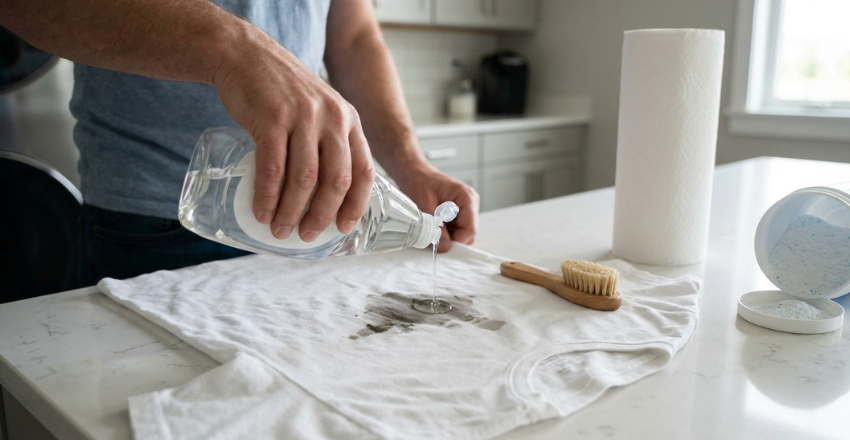
Use this quick framework when you’re unsure what to do:
- Fresh and washable: Blot, absorb, pretreat, wash, and air-dry.
- Old but washable: Pretreat longer, soak if permitted, wash, and repeat.
- Already dried: Reapply liquid detergent and expect several treatments.
- Delicate or valuable: Test first or use a professional cleaner.
- Dry-clean-only: Blot and take it to a cleaner without washing it.
- Unknown fabric: Choose the gentlest method and avoid heat.
This approach is safer than treating every garment with the strongest available product.
Frequently Asked Questions
What is the fastest way to remove fresh grease from fabric?
Blot up the spill immediately, cover it with absorbent powder, then apply clear dish soap or liquid detergent. Wash the item according to its care label and air-dry it.
Baking soda can absorb some surface residue, especially when the spill is fresh. It works best as a preparation step before detergent rather than as the only treatment. Maytag identifies both baking soda and cornstarch as useful absorbents.
A small amount of clear dish soap is often suitable for washable fabrics, but you should test it first. Avoid formulas containing dyes, moisturizers, bleach, or strong fragrances on delicate or light-colored material.
Follow the garment’s care label. Laundry-industry guidance generally recommends using the warmest water safe for the material after pretreatment.
Yes. Apply liquid detergent to the dry mark, leave it for about ten minutes, and wash the garment again. Air-dry it afterward. Complete removal may take several attempts, particularly after repeated heat exposure.
Use one for dry-clean-only garments, leather, suede, silk, structured clothing, vintage pieces, unstable dyes, or valuable items. Professional help also makes sense when repeated home treatments start to affect the material.
Your Next Step
Treat the garment before placing it in the laundry basket. Blot the spill, apply an absorbent powder, pretreat it, and keep the item away from dryer heat until it passes a dry inspection.
For more straightforward maintenance advice, explore Gladnota’s everyday home solutions.