Direct answer: Twilight crape myrtle is a large, sun-loving flowering tree known for deep purple summer blooms, peeling bark, and warm fall color. In U.S. gardens, give it full sun, well-drained soil, regular water while establishing, and enough room for a mature crown. Prune lightly, not by topping.
This cultivar works best where its mature size can be an asset instead of a pruning problem. It can serve as a summer focal point, a lawn tree, or part of a loose privacy planting. Its long bloom season also gives homeowners color after many spring-flowering trees have finished.
| Feature | What to expect |
|---|---|
| Botanical name | Lagerstroemia indica ‘Twilight’ |
| Plant type | Deciduous flowering shrub or tree |
| Mature height | Commonly about 15 to 25 feet in U.S. nursery guidance |
| Mature spread | Often about 10 to 15 feet, though wider growth can occur |
| Flower color | Rich purple |
| Bloom season | Summer into early fall |
| Light | Full sun |
| Soil | Well-drained; adapts to several soil textures |
| Common U.S. hardiness range | USDA Zones 7 to 9 |
| Pruning | Light structural pruning in late winter or early spring |
Cultivar descriptions vary somewhat by region, growing conditions, and training style. Several U.S. sources describe mature heights from about 15 to 25 feet, while regional listings may give smaller or broader dimensions. Plan from the larger end when space is limited.
Twilight Crape Myrtle Size, Shape, and Bloom Season
Twilight is not a compact patio cultivar. It can become a substantial ornamental tree, especially in warm parts of the South. Give it enough overhead clearance and room for the crown to develop naturally. Trying to hold a large cultivar at half its normal height creates needless pruning work.
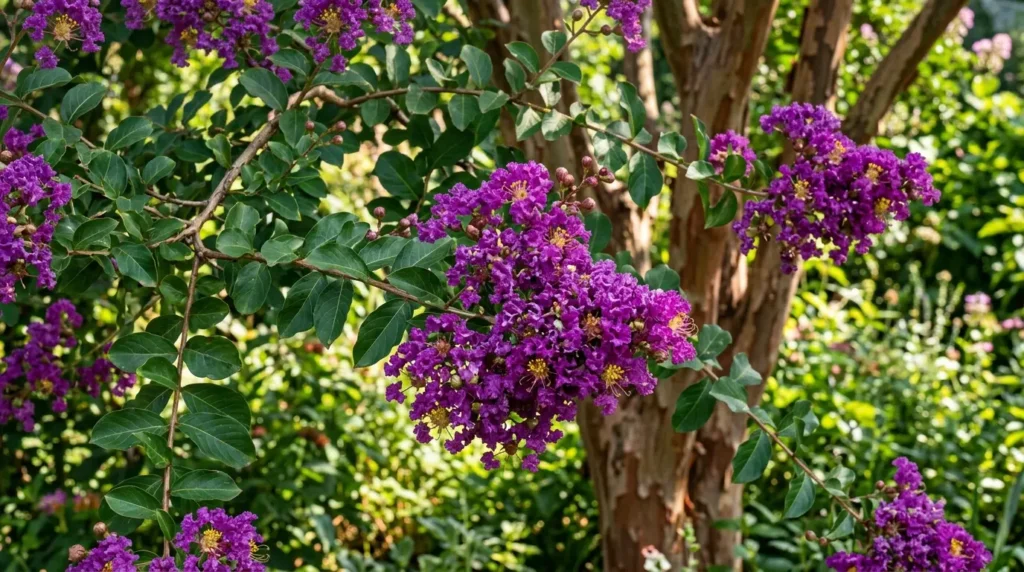
The flowers are the main attraction. Large clusters of purple blooms appear during summer and can continue into early fall. The foliage also adds seasonal interest, while smooth, peeling bark becomes more noticeable after leaves drop.
A multi-trunk form creates a broad, sculptural appearance. A trained single trunk gives a more conventional small-tree shape. Choose the form based on the available space rather than trying to reshape an established specimen later.
Sun, Soil, and Hardiness Requirements
Choose a site with full sun. University of Georgia Extension notes that heavy shade reduces growth and flowering while increasing conditions that favor problems such as powdery mildew. Full sun also helps the crown dry faster after rain.
Drainage matters more than having a perfect soil type. Crape myrtles tolerate clay, loam, and sandy soils when excess water can move away from the roots. NC State and UF/IFAS both describe the species as adaptable but best suited to sunny, well-drained sites.
Twilight is commonly sold for USDA Zones 7 through 9. Gardeners near the colder edge should use a protected location and expect winter conditions to affect growth differently from the Deep South.
How to Plant It for a Strong Start
Good placement prevents many future problems. Before digging, look upward for utility lines and outward toward buildings, fences, walks, and other trees.
- Choose an open,, sunny site. Avoid deep shade and spots that remain soggy after rain.
- Allow for mature width. Give the crown room instead of depending on yearly size-control pruning.
- Dig wide, not deep. Keep the root flare at or slightly above the surrounding soil level.
- Backfill with the existing soil. Avoid creating a small pocket of radically different soil around the roots.
- Water deeply after planting. Keep the root area evenly moist while the plant becomes established.
These steps follow general extension guidance for establishing crape myrtles and other woody ornamentals in well-drained soil.
Watering, Fertilizing, and Pruning
New plants need more consistent moisture than established trees. University of Georgia Extension recommends thorough watering at planting and about weekly watering during the first two months when rainfall is absent. Established plants tolerate dry periods better, though supplemental water can support flowering during prolonged drought.
For a convenient watering setup around larger beds and young trees, Gladnota’s expandable garden hose guide covers hose length, fittings, and storage considerations.
Avoid assuming that more fertilizer means more flowers. Heavy nitrogen feeding can promote leafy shoots while reducing bloom performance. Clemson Extension recommends moderate feeding and warns against excessive nitrogen.
Pruning should focus on structure. Remove dead branches, crossing growth, basal suckers, and poorly positioned shoots. If pruning is needed, late winter or early spring is usually the right period because flowers develop on new seasonal growth.
Do not top the tree into thick stubs. Severe topping produces weak shoots, encourages suckering, and destroys the natural branch structure. Choosing the right mature size at planting is easier than correcting an oversized tree every winter.
Common Problems to Watch For
Powdery mildew is one of the better-known crape myrtle diseases. It can coat young foliage, shoots, and flower buds with white or gray growth. Shady, humid, crowded conditions increase the risk.
Cercospora leaf spot, aphids, and sooty mold can also appear. Regular inspection makes early symptoms easier to identify. Good sunlight, sensible spacing, proper watering, and restrained fertilizing help reduce plant stress.
Check periodically for these warning signs.
- White powder on new leaves or flower buds.
- Dark leaf spots and premature leaf drop.
- Sticky residue associated with sap-feeding insects.
- Excessive shoots growing from the base.
- Dead, rubbing, or storm-damaged branches.
If animals are digging around beds or disturbing mulch near young plantings, Gladnota’s guide to managing chipmunks around yards and gardens offers practical prevention ideas.
Twilight and Twilight Magic Are Different Plants
One common buying mistake is confusing Twilight with Twilight Magic. Their names sound similar, but nursery listings identify them as different cultivars.
Classic Twilight is generally sold as Lagerstroemia indica ‘Twilight’ and is known for purple flowers and green foliage. Twilight Magic is the patented hybrid ‘PIILAG-VIII’. It is commonly marketed with dark plum foliage and pink flowers.
Check the botanical or cultivar name on the plant tag before buying. That simple step can prevent a surprise in mature size, foliage color, or flower color.
Where This Tree Works Best
Use this cultivar when you want a medium-to-large-flowering ornamental with strong summer color. Open lawns, broad planting beds, and sunny property edges usually make more sense than narrow foundation strips.
Its roots are generally not considered a major problem by UF/IFAS, but every mature tree needs adequate soil space. Avoid squeezing it into tiny pavement openings or planting the trunk against walls and narrow walks.
If you are comparing summer bloom with a spring-flowering option, Gladnota’s Kwanzan cherry tree planting and care guide can help you compare mature size, flowering season, and site needs.
Choose the Site Before You Buy the Tree
Measure the planting area first. Confirm that it receives strong sunlight, drains after rain, and has room for a crown that may reach well beyond the size of the nursery container.
A well-placed tree needs less corrective pruning and has a better chance to flower freely. Start with the right location, water consistently during establishment, and let the cultivar develop its natural form.
Frequently Asked Questions
Common causes include inadequate sunlight, excessive nitrogen fertilizer, drought stress, or severe pruning. Check the growing conditions first rather than automatically adding fertilizer or cutting the tree harder.
No. Twilight Magic is a different patented hybrid cultivar. It is sold for dark foliage and pink flowers, while classic Twilight is associated with purple flowers. Always check the cultivar name printed on the nursery label.
Prune only when needed, usually in late winter or early spring before new growth begins. Remove suckers, damaged wood, and crossing branches rather than cutting the crown back to large stubs.
Full sun is the safest choice for strong flowering. Too much shade can reduce bloom production and create conditions that favor powdery mildew.
Many U.S. nursery descriptions place mature height around 15 to 25 feet, with spreads often near 10 to 15 feet. Regional conditions and training can change those numbers, so allow extra room if the planting site is tight.