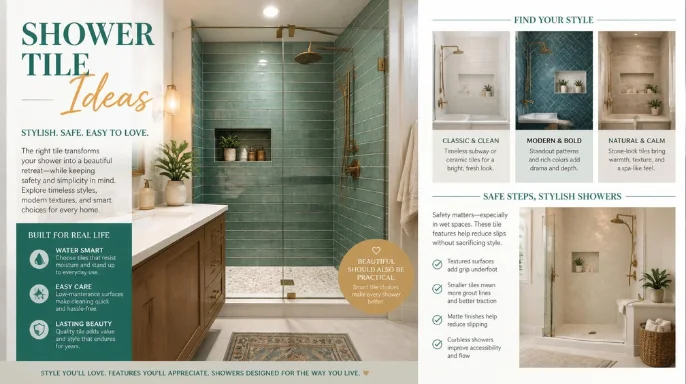
Choosing among shower tile ideas gets easier when you separate style from performance. Walls can handle bigger formats and glossier finishes. Floors need grip, drainage, and a layout that follows the slope.
Start with porcelain or glazed ceramic on walls, then choose a floor tile rated for wet use. Use one dominant color, one pattern, and grout that supports the look. In small showers, fewer visual breaks usually make the space feel calmer and larger.
| Design goal | Good starting point | Watch for |
| Easy cleaning | Large-format porcelain walls | Slippery polished floor finishes |
| Small shower | Light colors and fewer grout lines | Busy contrast on every surface |
| Bold focal point | Colored or patterned back wall | Competing patterns around niches |
| Classic look | Subway, square, or marble-look tile | Trendy grout that dates quickly |
| Safer floor | Wet-use-rated mosaic or textured tile | Glossy surfaces underfoot |
Key Takeaways
- Choose wall and floor surfaces separately because they perform different jobs.
- Porcelain offers low water absorption and many stone, concrete, and color options.
- Small bathrooms usually benefit from fewer visual breaks and restrained contrast.
- Floor tiles need wet-use approval, not simply a finish that feels rough.
- Grout color changes both the style and the visible maintenance burden.
17 Shower Tile Ideas for a Better-Looking, Easier-to-Live-With Bathroom

The strongest shower tile ideas usually repeat one material or color across the enclosure. Contrast works best when it has a clear purpose. These ideas cover modern, traditional, small-space, and low-maintenance bathrooms.
1. Use Warm Large-Format Porcelain on the Main Walls
Warm beige, limestone-look, or soft taupe porcelain creates a calm backdrop. Larger pieces reduce visible grout lines and make daily wiping easier. Keep the floor more textured, even if it matches. the walls
2. Stack Rectangular Tile Vertically
A vertical stack draws the eye upward and gives simple rectangles a cleaner rhythm. It works well in low-ceiling or narrow bathrooms. Matching grout keeps the pattern subtle instead of grid-heavy.
3. Try Handmade-Look Ceramic for Gentle Texture
Uneven edges and varied glaze add movement without requiring a loud pattern. Soft cream, blue, and sage feel especially relaxed. Use this look on walls, then choose a simpler floor.
4. Get a Marble Look Without Natural-Stone Upkeep
Marble-look porcelain gives you veining with easier routine care. Large panels make the pattern feel calmer and more continuous. Choose restrained veining if the bathroom already has strong fixtures.
5. Add Terrazzo Character With Porcelain
Terrazzo-look porcelain brings speckled color without relying on poured terrazzo. It suits midcentury, playful, and contemporary bathrooms. Pair it with quiet walls if the chips are large or colorful.
6. Make Green the Focal Color
Olive, moss, emerald, and muted forest tones give a shower strong visual identity. A single green wall can be enough. Repeat the color in towels or accessories instead of tiling everything.
7. Use Blue Glossy Tile Where Light Matters
Blue glazed tile can bounce light and add depth on vertical surfaces. It works especially well with nickel or brass fixtures. Keep the floor matte or otherwise approved for wet use.
8. Pair Dark Tile With Dark Grout
Black, charcoal, or espresso tile feels calmer when grout does not create a bright grid. Matching grout also lets texture carry the design. Check water quality because mineral deposits can show on dark surfaces.
9. Warm Up White Tile With Softer Grout
White tile does not need stark white grout. Light gray, beige, or warm ivory can soften the contrast. A warmer joint also coordinates easily with wood vanities and brushed metal.
10. Limit Herringbone to One Feature Area
Herringbone adds energy, so it rarely needs to cover every wall. Use it behind fixtures or on one back wall. A simpler surrounding field keeps the pattern from feeling crowded.
11. Put Mosaic Detail Inside the Niche
A niche is a useful place for a smaller pattern or contrasting color. The limited area keeps installation and visual noise contained. Match one niche color to the main wall for cohesion.
12. Use Fluted or Dimensional Tile Above the Floor
Dimensional tile creates shadow and texture on a feature wall. It looks strongest where water does not constantly pool. Check cleaning access before choosing deep grooves near corners or fixtures.
13. Build a Two-Tone Color Block
Two related colors can divide the enclosure without adding another material. Keep the line aligned with a niche or fixture height. That connection makes the color change look planned.
14. Use One Tile Family in Different Sizes
Choose a larger format for walls and a smaller matching format for the floor. This creates continuity without ignoring traction or slope. Many collections offer coordinated mosaics for this reason.
15. Choose a Wet-Rated Mosaic Floor
Small mosaics can follow shower slopes more easily than large rigid pieces. Extra grout joints may also improve underfoot grip. Confirm the manufacturer approves the exact product for shower floors.
16. Keep Real Stone as a Deliberate Accent
Marble, travertine, and other natural stones bring unique color and movement. They may need more careful cleaning and sealing. Use stone where you value its character enough to maintain it.
17. Continue One Visual Language Into a Curbless Shower
A curbless layout feels larger when the bathroom and shower read as one composition. Color continuity can strengthen that effect. The floor assembly still needs correct waterproofing, slope, drainage, and wet-use surfaces.
How to Choose Materials for Shower Walls and Floors
Porcelain is a practical starting point because standards define it by low water absorption. Ceramic offers many colors, sizes, and glaze options. Glass can be used for accents, while natural stone requires more maintenance planning.
| Material | Strong use | Main advantage | Main consideration |
| Porcelain | Walls and approved floors | Low water absorption | Harder cutting and drilling |
| Glazed ceramic | Walls | Color and price variety | Check floor approval separately |
| Glass | Walls and accents | Reflects light | Shows water spots easily |
| Natural stone | Walls and selected floors | Unique appearance | Cleaning and sealing needs |
Do not assume one surface should cover every part of the enclosure. Prioritize walls for cleanability, appearance, and moisture suitability. Floors add traction, drainage, slope, and barefoot comfort.
Small Bathroom Strategies That Reduce Visual Clutter
Small showers often feel larger when the eye crosses fewer hard visual breaks. Light colors, matching grout, and continuous wall fields can help. Large formats can work, but awkward cuts may defeat the intended simplicity.
Scale should fit the actual wall dimensions, not a universal rule. Test a full layout on paper before ordering. For nearby fixture planning, see Gladnota’s pedestal sink buying guide.
Safety Matters Most on the Shower Floor
For level interior wet spaces, ANSI standards use wet DCOF 0.42 as an important benchmark. That number does not guarantee slip prevention in every situation. Product classification, contaminants, maintenance, and manufacturer guidance still matter.
Porcelain also has a clear technical definition in North America. It has water absorption of 0.5 percent or less under ASTM C373. That makes porcelain useful in wet areas, but you still need separate confirmation for floor suitability.
Grout Color and Maintenance Can Change the Whole Result
Matching grout makes the field read as one surface. Contrasting grout highlights every joint and emphasizes pattern. Choose contrast only when you want the grid to become part of the design.
Maintenance also matters before the first day of installation. More grout joints create more edges that need cleaning. Gladnota’s pink shower residue cleaning guide explains how moisture and surface care affect recurring buildup.
Plan the Design Around the Remodeling Budget
Tile price is only one part of a shower project. Waterproofing, demolition, plumbing, and glass can outweigh finish upgrades. Gladnota’s walk-in shower cost guide can help you frame the full project before selecting materials.
If you are adding a bathroom, plumbing location can sharply affect the budget. Keeping drains near existing wet walls usually saves work. Gladnota’s bathroom addition cost guide covers layout and plumbing choices before decorative finishes.
Plan the Tile Before You Buy
Start with two or three samples and view them under your bathroom lighting. Confirm floor ratings, grout color, edge details, and niche cuts before ordering. Then have your installer review the layout before finalizing material quantities.
Frequently Asked Questions
What Tile Is Best for Shower Walls?
Porcelain and glazed ceramic are practical choices for many shower walls. Porcelain has very low water absorption, while ceramic offers a wider range of style options. Always confirm the chosen product is approved for the intended wet application.
What Tile Is Safest for a Shower Floor?
Choose a product approved for wet-floor use. Smaller mosaics are common because they follow slopes and add grout joints. Check manufacturer guidance and applicable slip-resistance classifications before buying.
Do Large Tiles Make a Small Shower Look Bigger?
They can, because fewer grout lines may reduce visual clutter. The effect depends on wall size, cuts, color, and layout. A medium format may look cleaner when oversized pieces require awkward trimming.
Should Shower Walls and Floors Match?
They do not need to match exactly. Coordinated colors or related tile collections can create continuity without sacrificing floor performance. Different sizes from one collection often provide an easy solution.
What Grout Color Is Easiest to Live With?
Mid-tone grout often hides routine discoloration better than bright white. Matching grout also makes joints less visually dominant. Select a grout approved for wet areas and follow its maintenance guidance.