Homemade ant bait can help with a small indoor ant problem when you match the bait to what the ants are eating. The basic method combines an attractive food with a slow-acting ingredient. Worker ants feed on it and may carry some back to the hidden colony. Bait takes patience. Don’t spray insecticide around it, and keep every mixture away from children, pets, food-preparation surfaces, and wildlife.
| Quick fact | Practical guidance |
| Best use | A small, localized trail of common household ants |
| Sweet bait attracts | Ants feeding on sugar, syrup, fruit, or sweet spills |
| Protein or grease bait attracts | Ants feeding on meat, pet food, grease, or oily crumbs |
| Expected timeline | Several days to a few weeks |
| Best placement | Beside an active trail in a protected bait station |
| Main safety rule | Keep bait inaccessible to children and animals |
| Time to call a professional | Ants return, spread into several rooms, or damage wood |
Direct answer: Start by observing what the ants are eating. Offer a small sweet or grease-based bait in a covered station beside their trail. Let workers carry it toward the nest, monitor feeding, and replace dried bait. Clean competing food sources, but don’t spray or disturb ants actively visiting the station.
How Ant Bait Controls More Than the Ants You See?
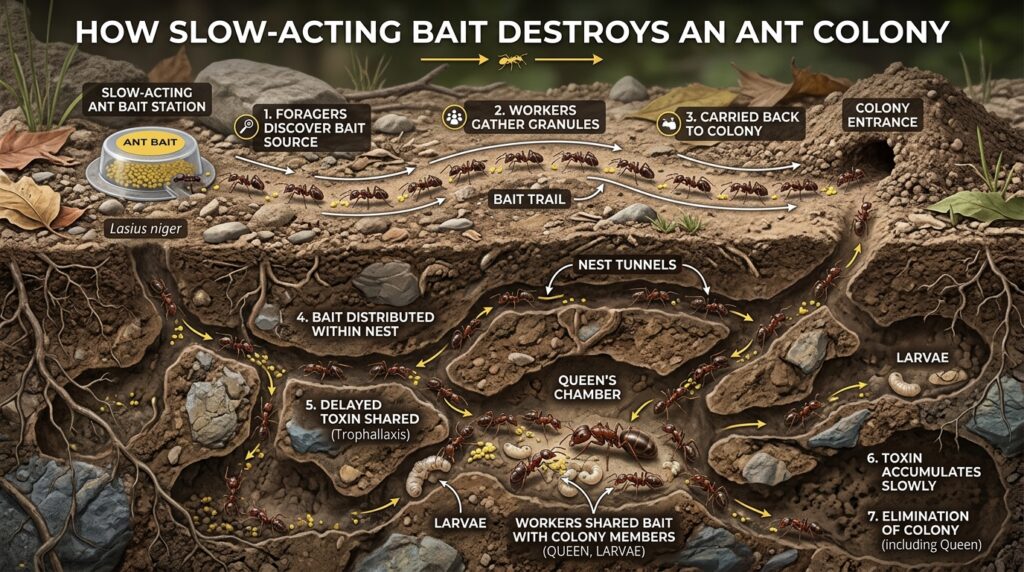
Sprays usually affect workers moving across a visible surface. They may have little effect on a colony hidden behind a wall, beneath flooring, or outdoors. Bait works differently. Foraging workers collect food and share it with other members of the nest.
A slow treatment has homemade ant bait time to move through that feeding system before the exposed workers die. University of Minnesota Extension describes bait as one of the most useful ways to treat an indoor nest. It also warns that different species don’t respond equally to every food or active ingredient.
This explains two common frustrations:
- Ant activity may rise around the station at first.
- A bait can be ignored even when it worked during a previous infestation.
Food preferences change with the species, season, and colony’s needs. Ants visiting syrup may want carbohydrates, while ants gathering pet food or oily crumbs may prefer protein or grease.
What You’ll Need?

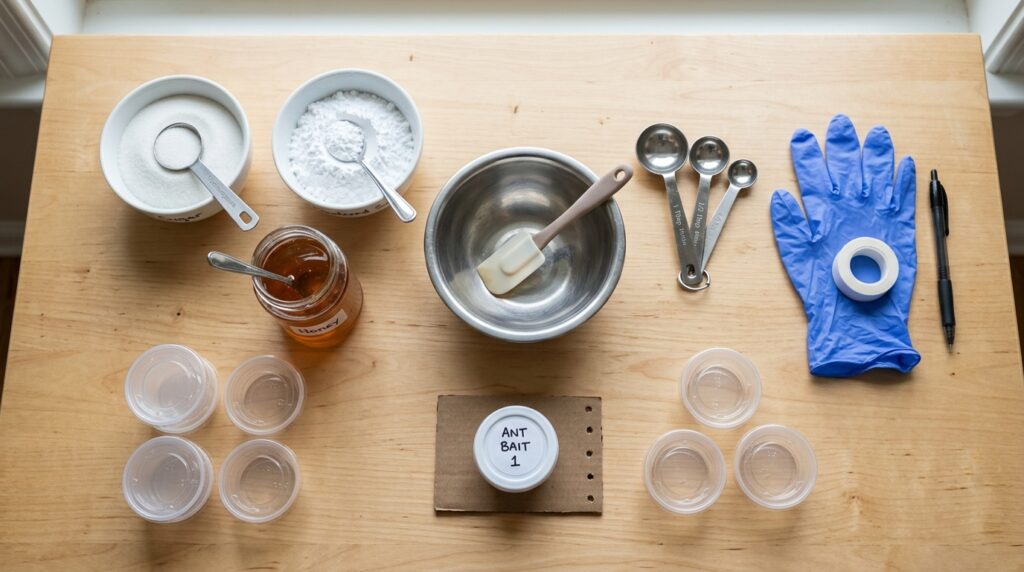
Gather only the supplies required for the option you plan to use:
- A clean jar lid or shallow disposable dish
- A small covered container with ant-sized access holes
- Measuring spoons
- Disposable gloves
- Sugar water, honey, or corn syrup
- Powdered sugar
- A grease such as shortening or a small amount of nut butter
- Baking soda, boric acid, or a pesticide-labeled borate product
- A marker for labeling the station
- Paper towels and warm, unscented soapy water
A covered station is preferable to an open puddle or loose powder. Place it where ants can enter but children and animals cannot. The National Pesticide Information Center notes that boric acid exposure can occur when products are accessible to children or pets. Borax may also irritate the skin and eyes.
Homemade Ant Bait: Three Options to Try
No single mixture attracts every species. Begin with the food the ants already appear to prefer.
Option 1: Low-Concentration Sweet Bait
This option suits small ants feeding on sugar, juice, syrup, or other sweet material.
Ingredients
- Sugar water, diluted honey, or diluted corn syrup
- A pesticide-labeled boric-acid product
- A covered bait station
Extension guidance describes a sweet solution containing about 2% to 5% boric acid. The lower end is a sensible starting point because an overly strong mixture may repel ants or kill workers before they return to the colony.
Follow the concentration and application directions on the product label. Household borax and boric acid aren’t interchangeable by volume, so don’t guess at a conversion.
Best for: Ants actively feeding on sweets.
Limitations: It won’t help if the colony currently wants protein or grease. An open liquid can also spill, dry out, or expose non-target animals.
Option 2: Powdered Sugar And Grease Bait
Try this when ants gather around pet food, meat residue, cooking grease, or oily crumbs.
Ingredients
- Powdered sugar
- A small amount of shortening, nut butter, or another grease
- A labeled borate product suitable for ant bait
- A covered station
Mix the food ingredients into a soft crumb or paste to create an effective homemade ant bait. Add the active ingredient only as directed by its label. Place a small portion inside the station rather than spreading it across a floor or counter. The Spruce’s pest-control guidance recommends a grease-based mixture for protein-seeking ants and stresses keeping borate bait away from small children and animals.
Best for: Ants ignoring sweet liquids but feeding on fats or protein.
Limitations: Greasy bait can spoil, attract other pests, or stain surfaces. Replace it when it dries, smells stale, or becomes contaminated.
Option 3: Baking Soda and Powdered Sugar
A borate-free mixture commonly uses equal parts baking soda and powdered sugar.
Ingredients
- One part baking soda
- One part powdered sugar
- A dry, covered station
Best for: A cautious trial when you don’t want to use a borate ingredient.
Limitations: Evidence and results are less predictable than properly formulated commercial bait. Don’t label the mixture “non-toxic,” since ingesting household substances can still harm a child or animal.
How To Set Up The Bait In Seven Steps?
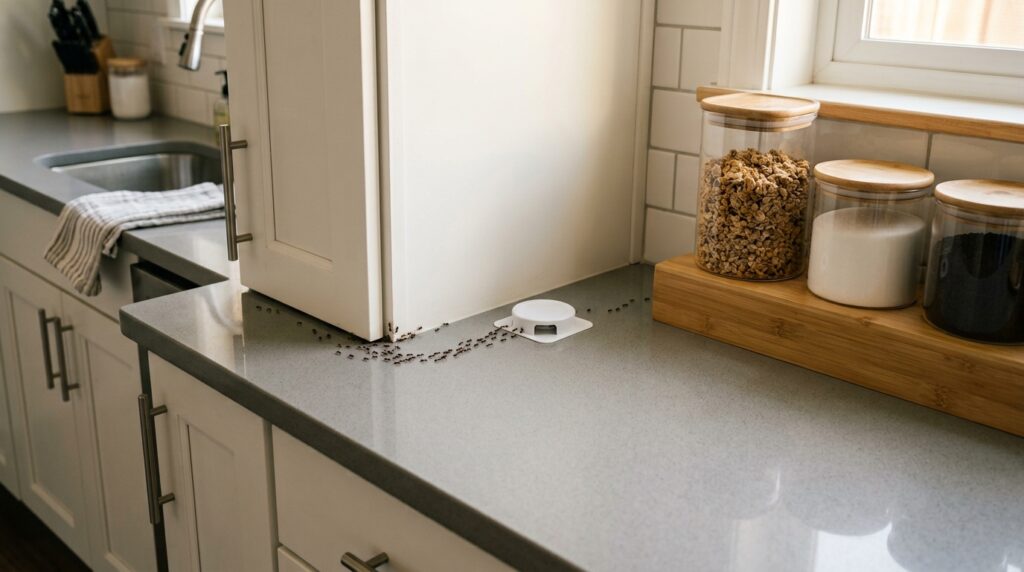
Successful placement matters as much as the recipe. Extension guidance recommends putting bait only where activity has been observed and replacing an ignored bait with a different option.
Where To Place A Bait Station?
Good indoor locations include:
- Under a sink, away from stored cleaning products
- Behind a refrigerator or range
- Inside a locked lower cabinet
- Beside a plumbing or utility penetration
- Along a baseboard near the active route
- Near a window or door gap used by the ants
Avoid countertops, dining surfaces, children’s play areas, pet-feeding zones, and exposed outdoor locations.
Don’t place bait directly on an ant trail if the container blocks their path. Set it beside the route so workers can approach and leave easily.
For more information about treatment costs when a small problem becomes difficult, read Gladnota’s guide to ant exterminator costs. You can also browse the site’s pest-control resources for related prevention guidance.
Mistakes That Make Bait Less Effective
Spraying Ants Near The Station
Repellent sprays can contaminate the feeding area or prevent workers from reaching the bait. EPA guidance states that sprays and baits shouldn’t be used together in the same location.
Making The Mixture Too Strong

More active ingredient doesn’t always produce better control. A strong mixture may be rejected, or act before workers share enough with the nest.
Cleaning Away The Route Too Soon
Clean food residue before placing the station. Once ants begin feeding, avoid repeatedly disturbing their route. Clean remaining trails after activity declines.
Sealing The Entry Point Immediately
Sealing gaps is important for prevention, but closing the only visible route while ants are feeding may shift them to another opening. Monitor the bait first, then seal cracks once activity has fallen.
Expecting Overnight Results
Colony bait is intentionally slow. University of Minnesota Extension says control can take several weeks or even months in difficult cases.
Make Your Home Less Attractive to Ants
Homemade ant bait works better when the colony has fewer competing resources. Store sugar, cereal, flour, snacks, and pet food in sealed containers. Repair dripping taps and plumbing leaks. Wipe counters after cooking and remove grease from the range and backsplash. Rinse beverage containers before putting them in recycling. Vacuum crumbs beside appliances and beneath cabinet edges.
Take trash outside regularly and wash sticky bins.
Follow trails to exterior gaps around pipes, windows, doors, vents, and foundation joints. After the feeding activity declines, seal suitable openings with caulk or another material intended for the surface.
These steps follow integrated pest management principles, which combine identification, sanitation, prevention, monitoring, and targeted control.
Gladnota’s broader home-improvement section may help when the solution involves repairing leaks, damaged trim, or gaps around the building.
When DIY Treatment Isn’t Enough?
Stop relying on a home mixture when:
- Ants appear in several rooms or on several floors.
- They return after repeated baiting.
- Large black ants appear near damp or damaged wood.
- You find sawdust-like debris, hollow-sounding wood, or structural damage.
- Ants emerge from electrical outlets, wall gaps, or ceilings.
- Fire ants create mounds near a walkway, play area, or pet space.
- The household cannot keep bait securely away from a child or animal.
A professional can identify the species, locate likely nests, and choose an appropriate treatment. Species identification matters because some ants form multiple colonies or respond poorly to common household recipes.
Gladnota’s related guide explains what professional ant treatment may include and when an inspection may be worth the cost.
Final Verdict
Observe the trail before mixing anything when preparing homemade ant bait. Identify whether the ants are choosing sweet or greasy food, remove competing sources, and place a small amount of matching bait inside a protected station. Check it the next day. Continue only when ants are feeding and the station remains secure. When activity spreads, persists, or suggests a wood-nesting species, arrange a professional inspection rather than repeatedly changing recipes.
Frequently Asked Questions
The best option is the one the ants willingly collect. Start with a low-concentration sweet bait when they’re feeding on sugar. Try a grease-based option when they’re visiting pet food, meat, or oily residue. Use a covered station and follow all product-label directions.
You may notice fewer ants after several days, but colony control can require a few weeks. Larger nests, multiple colonies, competing food, or the wrong bait type can extend the timeline.
The food may attract additional foragers from the same colony. An early increase doesn’t necessarily mean the treatment failed. Avoid spraying the feeding ants, and monitor whether they continue carrying bait away.
Avoid placing it on food-preparation or dining surfaces. Use a protected location beside the trail, such as behind an appliance or inside a secured cabinet. Clean and sanitize any surface that has contacted the mixture.
Borax and boric acid shouldn’t be accessible to pets. Exposure can cause illness, and small animals may be more vulnerable. Use a tamper-resistant station in an inaccessible location or choose a properly labeled commercial station.
Vinegar can help clean trails, but its odor may interfere with feeding when applied beside a station. Use warm, unscented soapy water for cleanup, and keep strong cleaners away from active bait.