Learning how to remove moss from roof surfaces starts with one rule: protect the roofing material before trying to make it look clean. Use low-pressure water, a compatible moss treatment, and gentle removal methods. Never use a pressure washer on asphalt shingles.
Small, reachable patches may be manageable from a secured ladder. Widespread growth, steep slopes, brittle materials, or signs of leaks call for a qualified roofing professional.
| Key detail about how to remove moss from roof | Recommended approach |
| Best working conditions | A calm, dry day with no immediate heavy rain expected |
| Water pressure | Low-pressure flow from a garden hose |
| Cleaning product | A roof-compatible moss remover approved for your material |
| A tool to avoid | Pressure washer |
| Scrubbing method | Minimal, gentle contact with a soft brush when permitted |
| Professional help | Recommended for steep, high, damaged, or heavily covered roofs |
Key takeaways
- Treat the growth before trying to pull or scrub it away.
- Direct water down the slope so it doesn’t travel beneath shingles.
- Follow the cleaner label and the roofing manufacturer’s instructions.
- Protect gutters, siding, soil, and nearby plants from runoff.
- Stop if the surface begins shedding granules, cracking, or lifting.
How to Remove Moss From Roof Surfaces Step by Step

The safest method of how to remove moss from roof treats the growth gently and limits contact with the roofing material. Work from a ladder when the affected area can be reached without leaning or stepping onto the roof.
Inspect the roof and choose a safe work area.
Check the roof from the ground first. Don’t climb during rain, frost, strong wind, or extreme heat. Avoid any area that looks soft, loose, cracked, or unstable.
Place the ladder on solid, level ground and secure it according to its instructions. Keep your body between the ladder rails. Never stretch sideways to reach another section.
Protect gutters, walls, and landscaping.
Clear people, pets, furniture, and vehicles from the runoff area. Cover sensitive surfaces when the treatment label recommends it.
Pre-wet nearby plants with clean water. Direct downspouts away from ponds, rain barrels, and garden beds when possible. Some registered moss-control labels warn that excess runoff can harm plants and ornamentals.
Remove loose leaves and debris.
Lift away leaves, small branches, and other loose material that you can safely reach. Don’t pull firmly attached growth from beneath shingles or tiles.
Debris traps water and blocks the cleaner from reaching the affected surface. Clearing it also helps you see whether the roofing material is already damaged.
Apply a compatible moss remover.
Use a product intended for your specific roof covering. Asphalt shingles, clay tile, concrete tile, slate, wood, and metal don’t all tolerate the same chemicals.
Apply the product at the rate stated on its label. More solutions won’t necessarily work faster. Excess liquid increases runoff and may discolor roofing, siding, metalwork, or plants.
Allow the treatment to work.
Leave the product in place for the stated contact period. Don’t guess the waiting time. Depending on the formula, it may range from several minutes to a much longer weathering process.
The aim is to loosen or kill the growth before removal. Trying to scrub living, tightly attached material can tear shingles or remove their protective granules.
Rinse gently when the label requires it
Use a garden hose on low pressure. Direct the water downward, following the roof’s slope. Never spray upward beneath shingles, flashing, ridge caps, or tile edges. IKO warns that pressurized water can lift shingles, damage adhesive bonds, remove granules, and contribute to leaks. >Remove only loose remaining material. Lift loosened clumps by hand from a stable ladder position.
A soft brush may be suitable for certain materials, but use little pressure and follow the manufacturer’s advice. Stop when the growth resists removal. Don’t scrape under shingles or attack stubborn patches with a stiff brush. A roofer can treat what remains without sacrificing the surface to obtain an instant result.
Why Moss Shouldn’t Be Left on a Roof
Moss grows most readily where a surface stays damp and shaded. Its dense growth can hold moisture against roofing materials. Large clumps may also work beneath the edges of shingles and interfere with drainage.
Thin, recent growth isn’t always an emergency. It should still be addressed before it becomes thicker or spreads across a larger area. Roofing manufacturer IKO advises that dealing with substantial growth can degrade shingles and create opportunities for leaks. Ning, check the surface from the ground. Look for missing shingles, curled edges, cracked tiles, corrosion, soft decking, damaged flashing, or sagging areas. Cleaning won’t correct those faults.
Gladnota’s guide to choosing a qualified roofing contractor explains how to compare credentials, insurance, estimates, and warranties when professional work is needed. Gather everything before setting up the ladder. Repeated trips increase the chance of a fall or spill.
- A stable extension ladder with suitable footing
- Gloves and eye protection
- Slip-resistant footwear
- A garden hose with a gentle spray setting
- A pump sprayer reserved for the chosen product
- A moss treatment labelled for your roof material
- Plastic sheeting or another method for protecting nearby surfaces
- A soft, long-handled brush, only when the manufacturer permits it
- Collection bags for loose debris
Read the product label before opening the container. Some treatments must be rinsed, while others remain on the surface and work overtime. The label also provides dilution, protective equipment, weather, and runoff instructions.
Don’t combine household chemicals. Mixing bleach with ammonia-containing cleaners can create dangerous gases. Avoid homemade recipes unless both the roofing manufacturer and product guidance confirm the ingredients are compatible.
Methods That Can Damage the Roof
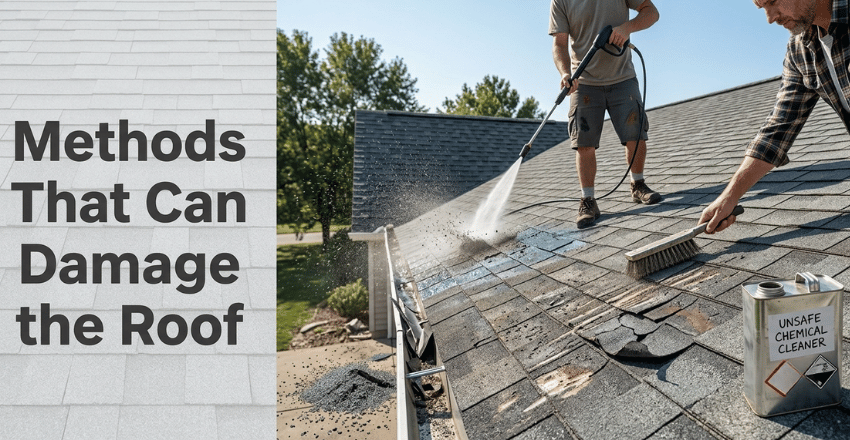
Pressure washing
A pressure washer can strip granules from asphalt shingles, force water beneath overlaps, break seals, and disturb fragile tiles. It may remove the visible growth quickly while creating a more expensive problem. Both IKO and other roofing guidance recommend low-pressure rinsing instead of a pressurized stream.
Hard brushes and forceful scraping can remove protective coatings or loosen the roofing material. Brush only when the material manufacturer allows it. Work down the slope rather than upward against overlaps.
Unapproved chemical mixtures
Strong bleach concentrations, acids, vinegar mixtures, and general-purpose outdoor cleaners may stain metal, damage coatings, or affect surrounding plants. A recipe that works on concrete isn’t automatically safe for a roof. For other exterior surfaces, Gladnota’s concrete-cleaning guide explains why the cleaner must match the material being treated.
A wet roof. Treated growth, water, and cleaning solutions can create an extremely slippery surface. Walking may also crack tiles or disturb aged shingles. Leave high or inaccessible sections to an insured contractor.
How Long Does Removal Take?
The active work may take several hours for a small area. The visible result can take longer. Some treatments loosen growth during the first application, while slow-acting products depend on later weathering.
Don’t repeat treatment early unless the label permits it. Applying too much product can damage the surface or increase polluted runoff. Check the area again after the recommended period. If thick patches remain, ask a roofer whether another treatment is appropriate. Persistent growth may hide damaged shingles or moisture problems.
When to Call a Professional
Hire a roofing professional when the roof is steep, high, fragile, wet, or difficult to reach. Professional help is also the safer choice when moss covers several sections or returns soon after treatment.
Arrange an inspection if you notice:
- Loose, cracked, curled, or missing shingles
- Cracked or displaced roof tiles
- Granules collecting in gutters
- Water stains in the attic or ceiling
- Soft decking or sagging sections
- Damaged flashing around vents or chimneys
- Growth extending beneath roofing edges
Ask the contractor to identify the proposed treatment, how runoff will be controlled, and whether the work affects any product warranty. Gladnota’s roofing resource section offers further guidance on maintenance, materials, and contractor decisions.
Prevent Moss From Returning
Cleaning deals with the current growth. Prevention addresses the damp and shaded conditions that support it.
- Trim overhanging branches: More sunlight and airflow help the surface dry after rain.
- Keep gutters clear: Blocked drainage can keep roof edges and nearby surfaces wet.
- Remove leaf litter: Organic debris holds moisture and creates sheltered growing areas.
- Check ventilation: A roofing professional can assess whether moisture is building up within the roof system.
- Inspect twice a year: Catching small patches reduces the need for forceful cleaning later.
- Repair damaged flashing: Water that repeatedly collects near joints creates favorable conditions for growth.
Some homeowners consider zinc or copper strips near the ridge. Their suitability depends on the existing roof, local runoff rules, and installation details. Poor installation can create leaks, so ask the roofing manufacturer or a contractor first.
Homeowners comparing future replacement options can also review Gladnota’s guide to metal roofing costs and installation factors.
Protect the Roof, Not Only Its Appearance

A safe cleaning process is controlled and patient. Treat the growth, use low-pressure water, and remove only what comes away without force. Stop when access becomes unsafe or the material shows damage. At that point, arrange a professional inspection rather than risking a fall, broken roofing, or a leak.
Conclusion
How to remove moss from roof safely is about protecting your roofing material, not just improving its appearance. Use a roof-compatible moss treatment, clean with low-pressure water, and avoid pressure washers or harsh scrubbing that can damage shingles.
Regular inspections, clean gutters, and trim overhanging branches will help prevent moss from returning. If the roof is steep, heavily covered, or already damaged, contact a qualified roofing professional to avoid unnecessary risks and costly repairs.
Apart from that, if you want to read more articles like this, then visit the Gladnota “roofing” category.
Frequently Asked Questions
Use a shingle-compatible treatment, follow its label, and rinse with low-pressure water when required. Work from a secured ladder rather than walking on the surface. Don’t pressure wash, scrape beneath shingles, or scrub hard.
Low-pressure water may loosen light growth, but established patches often remain attached. A compatible treatment helps release them without requiring aggressive brushing. Direct the water down the slope.
Not always. Some products are designed to kill the growth and let the weather remove it gradually. Pull away only material that releases easily. Follow the treatment instructions before rinsing or brushing.
Heavy growth can retain moisture and work beneath shingle edges. That can contribute to deterioration and create openings for water. Existing leaks may also indicate damaged flashing, decking, or roofing materials.
Check it from the ground during spring and fall and after major storms. Inspect sooner when trees shade the roof, gutters overflow, or growth has appeared.