


A curved sofa can soften a room, improve conversation, and create a striking focal point. It can also consume more floor space than expected. Before buying, check the full footprint, walking routes, delivery path, seat comfort, fabric, and how the piece will work with your daily routine. We cover this in more depth in Rent-to-Own Homes.
Rounded seating is a good choice when you have enough open floor area and want a sociable layout. It is less practical when every inch matters, the sofa must sit flat against a wall, or you need a long surface for frequent lounging and sleeping. More from us: Pedestal Sink.
| curved sofa: Quick buying guide | What to check |
| Best suited to | Open-plan rooms, conversation areas, and spaces with a central focal point |
| Main benefit | Softens straight architectural lines and draws seats toward one another |
| Main drawback | The arc can create unused space behind the frame. |
| Small-room option | A compact loveseat with a shallow curve |
| Helpful table shape | Round, oval, or softly irregular |
| Essential measurement | The deepest point of the arc, not only the width |
| Delivery check | Doors, hallways, stairs, elevators, and tight corners |
Key Takeaways
- Measure the entire arc and mark it on the floor before ordering.
- Leave enough room for people to walk behind or around the seating.
- Pick a compact, gently bowed design for a small living room.
- Check seat depth and back support in person when possible.
- Use an oval table or rug to connect the seating arrangement.
- Avoid buying solely because the silhouette is fashionable.
Rounded furniture remains visible in 2026 design coverage. Designers say softer profiles can break up rigid room lines and encourage a more conversational seating arrangement. The shape also has a long design history, including influential postwar pieces by Jean Royère and Vladimir Kagan. Theory does not mean every model will suit every home. The right decision depends on scale, comfort, construction, and how you use the room.
Is a Curved Sofa Right for Your Living Room?
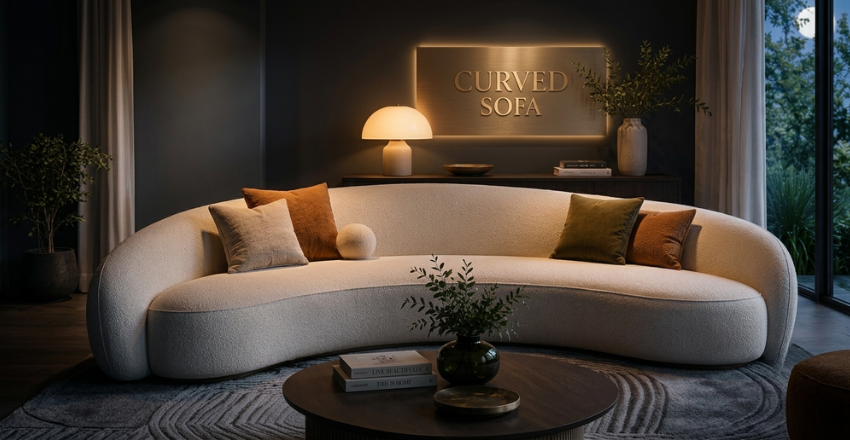
Start with the room’s purpose. A formal sitting area, large living room, or open-plan space often gives a sculptural curved sofa enough breathing room. The curved back can help define a zone without adding a wall or bookcase.
The shape also turns people slightly toward one another. That makes it useful for conversation, entertaining, or creating a more intimate arrangement around a coffee table.
A narrow family room may present more problems. Rounded frames cannot usually sit flush against a straight wall. This leaves a wedge of unused floor area behind the furniture and can reduce the space available in front. Design guidance comparing straight and rounded models notes that this hidden footprint is a common concern in smaller rooms. deciding, ask:
- Does the sofa need to sit against a wall?
- Will people walk behind it?
- Is the television the room’s main focal point?
- Do you often stretch out or sleep on the couch?
- Do you need modular pieces that can move later?
- Is the design comfortable from every seat?
A gently bowed three-seater may provide the look without the footprint of a dramatic semicircle.
How to Choose a Curved Sofa That Fits
Online product measurements can be misleading when they show only total width and height. The deepest part of the arc determines how far the frame projects into the room.
Use this process before ordering:
- Record the sofa’s width, total depth, back height, and seat height.
- Ask the seller for a floor plan or technical drawing.
- Mark the full footprint with painter’s tape.
- Add the coffee table and nearby chairs to your floor plan.
- Walk through the marked layout from every doorway.
- Check whether cabinets, doors, and windows can open.
- Measure the complete delivery route.
Do not measure the destination alone. Check your entrance, doorframes, hallways, staircase, elevator, and any corner where the furniture must turn. Buyers should also confirm whether the legs or sections detach for delivery. room-planning ideas, browse Gladnota’s interior design guides. Larger changes may also benefit from its renovation resources.
A Simple Floor-Space Test
Create a paper or taped template that includes the widest and deepest points. Do not mark a simple rectangle unless the manufacturer’s dimensions already account for the full bow.
Place a chair where each end of the sofa will sit. Then walk around the arrangement while carrying a laundry basket. This practical test reveals pinch points that may not feel obvious on a two-dimensional plan.
Compare the Main Shapes
Different profiles serve different rooms and habits.
| Shape | Space use | Best for | Possible drawback |
| Gentle bow | Moderate | Standard living rooms | The curve may appear subtle |
| Kidney shape | Moderate to high | Conversation zones | Harder to place against a wall |
| Semicircle | High | Large open rooms | Requires substantial floor area |
| Curved sectional | High | Entertaining and large families | Heavy and difficult to rearrange |
| Rounded loveseat | Low to moderate | Apartments and bedrooms | Limited seating |
| Modular arc | Flexible | Changing layouts | Sections may separate during use |
Verdict: A gentle bow or a rounded loveseat is the safest option for most homes. Choose a dramatic semicircle only when your room has enough open space to display it from several angles.
Comfort and Construction Matter More Than Shape

A beautiful profile cannot compensate for poor support. Test the model as you would any other sofa.
Sit upright for several minutes. Check whether your feet reach the floor and whether the back supports your shoulders. Then try your normal lounging position. Deep seats may feel inviting in a showroom but uncomfortable for shorter users without extra cushions.
Inspect these construction details:
- A solid, stable frame
- Even seams along the rounded back
- Cushions that return to shape
- Support across the center and both ends
- Fabric pulled smoothly around the arc
- Replaceable or reversible cushions
- A clear frame and upholstery warranty
Sectional and modular seating remain popular because they can adapt to different layouts. A modular arc may offer more flexibility than a single large frame, especially when access is difficult or you expect to move. Upholstery for Daily Use: Bouclé, velvet, linen blends, leather, and performance fabrics can all suit rounded furniture. Your household should guide the choice.
Bouclé emphasizes a soft, sculptural profile, but its loops can trap crumbs and catch on claws. Velvet adds depth and changes appearance as the pile moves. Linen blends feel relaxed, though pale shades may require more care. Leather is easier to wipe, but every panel must be cut and stitched carefully around the frame.
For children, pets, or frequent entertaining, consider:
- A tightly woven performance fabric
- A medium or patterned color
- Removable cushion covers
- A published cleaning code
- Fabric samples tested under your room’s lighting
Check the care instructions before applying any cleaner. Gladnota’s broader home improvement guides also favor testing gentle methods before using stronger products.
How to Style the Shape
Let the seating establish the room’s main line. Too many competing curves can make the space feel themed.
An oval or round coffee table usually follows the inner arc without creating sharp corners near people’s knees. A large rectangular rug can provide contrast, while an oval rug reinforces the softer outline.
Try one of these arrangements:
Open-Plan Zone
Float the sofa away from the wall and turn the inner arc toward a fireplace, view, or central table. The back will help separate the seating zone from a dining or kitchen area.
Small Living Room
Choose a shallow bow rather than a deep crescent. Keep side tables compact and avoid placing bulky storage behind the frame.
Conversation Area
Position two lounge chairs across from the opening. Keep their scale lighter so the main piece remains visually dominant.
Rectangular Room
Use the curve to interrupt the room’s long straight lines. A rectangular rug, slim console, or angular artwork can prevent the design from becoming too rounded.
Pros and Cons
Pros
- Creates a strong visual focal point
- Softens square and rectangular rooms
- Encourages face-to-face conversation
- Helps define an open-plan seating zone
- Avoids sharp outer corners
- Looks attractive from several viewpoints
Cons
- May use more floor area than a straight model
- Can leave unused space behind the back
- Often limits coffee-table choices
- It may be difficult to carry through tight entrances
- Can provide less space for lying flat
- It may be harder to rearrange later
Common Buying Mistakes

The first mistake is shopping by width alone. A model may fit between two walls but still project too far into the room.
The second is ignoring how the family sits. A sculptural piece designed for upright conversation may disappoint someone who wants a deep television couch or guest bed.
The third is selecting fabric from a small screen image. Order swatches and view them during the day and evening.
The fourth is copying a showroom layout. Showrooms often have high ceilings, wide walkways, and little visual clutter. Recreate the actual footprint at home before paying a deposit.
For more practical planning advice, visit Gladnota’s everyday home solutions.
Final Recommendation
Buy a curved sofa when its shape improves both the layout and the way people use the room. Choose a gently bowed curved sofa for broad flexibility, or a compact curved sofa loveseat when space is limited.
Skip the dramatic arc when the furniture must sit against a wall, block a busy route, or provide a long sleeping surface. Measure carefully, test the support, check the delivery path, and judge the piece as furniture first and sculpture second.
Apart from that, if you want to read more articles like this, then visit the Gladnota “Home improvement” category.
Frequently Asked Questions
It can work when the frame is compact and the bow is shallow. Mark the complete footprint first. A straight model will usually offer more seating per square foot when floor space is tight.
It usually looks better when pulled forward. Placing a deep arc against a flat wall creates an awkward gap and hides the feature that makes the design distinctive.
Round, oval, and softly irregular tables tend to follow the inner curve. Check that every seat can reach the surface without restricting the main walkway.
Comfort depends on seat depth, cushion fill, back height, and frame support rather than the outline alone. Test every seating position, since the center and ends may feel different.
Rounded forms move in and out of trend coverage, but they have appeared in notable furniture designs for decades. A restrained silhouette in a durable fabric is less likely to feel dated than an exaggerated, trend-led model.

